Mon, August 31, 2026

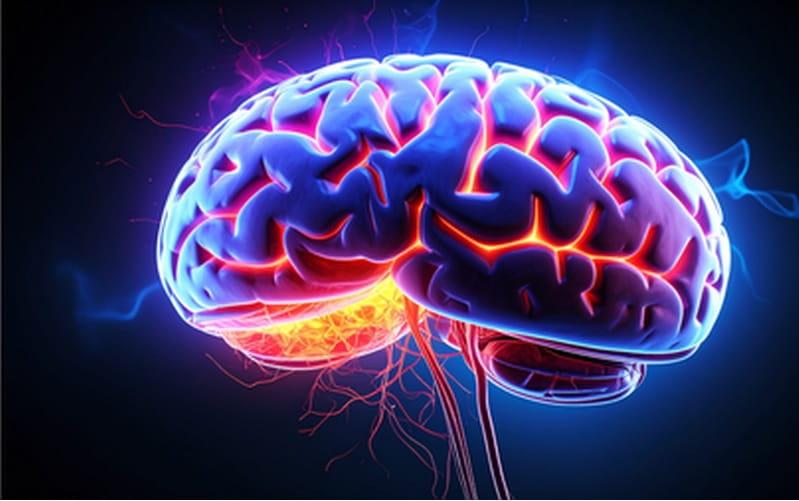
Photo: IANS
A new study by researchers at the Indian Institute of Technology (IIT) Kanpur and Ganesh Shankar Vidyarthi Memorial (GSVM) Medical College suggests that electrical signals from the brain and stomach, when combined with clinical symptoms, could help predict whether a patient is likely to respond to antidepressant treatment within just 7–10 days.
The finding could mark a significant shift in how treatment response in depression is assessed. Doctors typically need around four to six weeks to determine whether an antidepressant is working adequately. An approach that provides useful clues during the first week could potentially reduce the time patients spend on ineffective treatments and allow therapy to be adjusted earlier.
The study is particularly relevant because antidepressant treatment does not work equally well for everyone. More than half of patients may fail to achieve an adequate response to their first antidepressant, often leaving them to go through weeks of uncertainty before another treatment is considered.
Depression affects an estimated 5 per cent of adults globally and about 4.5 per cent of India's population, highlighting the potential importance of tools that can support faster and more personalised treatment decisions.
"Our study showed that objective non-invasive brain and gut electrophysiological signals collected in about the first week of treatment already contain valuable information about treatment response to precisely guide the intervention," said Dr Pragathi Priyadharsini Balasubramani, Assistant Professor in the Department of Cognitive Science at IIT Kanpur and corresponding author of the study.
The researchers focused on the relationship between the brain and the gastrointestinal system, often described as the brain-gut connection. They examined electrical activity in the brain using electroencephalography (EEG) and electrical activity in the stomach through electrogastrography (EGG), alongside information about patients' clinical symptoms.
The study involved 206 participants, including 144 patients with depression who had not previously received treatment. EEG and EGG recordings were taken when treatment began and again approximately one week later.
The researchers then examined whether changes and patterns in these biological signals, together with clinical information, could predict treatment outcomes that were assessed four to six weeks after antidepressant therapy began.
The results indicate that the combination of physiological and clinical data could provide meaningful early warning signals. During model evaluation, the predictive system identified patients who were unlikely to respond to treatment with 84 per cent sensitivity and 78 per cent specificity.
When tested on an independent group of patients, the model achieved an overall accuracy of 77.3 per cent. For identifying nonresponders, it recorded 80 per cent specificity and 71.4 per cent sensitivity.
The researchers also found that patients with different symptom profiles showed distinct patterns of brain and gut activity that were associated with their eventual treatment outcomes.
"The different symptom profiles were associated with distinct patterns of brain and gut physiology linked to treatment outcomes," said Amal Jude Ashwin Francis, PhD Scholar in IIT Kanpur's Department of Cognitive Science and first author of the study.
According to Francis, identifying these biological subtypes could help explain why two patients with similar diagnoses may respond differently to the same antidepressant. Such insights could eventually contribute to more personalised approaches to depression treatment.
The findings do not mean that antidepressant effectiveness can already be determined with certainty after a week, but they point towards the possibility of developing objective, non-invasive tools for earlier treatment assessment.
If validated in larger and more diverse patient populations, brain-gut biomarkers could complement conventional clinical assessments and help doctors identify potential nonresponders earlier, potentially reducing prolonged trial-and-error in depression care.
The next important step will be further validation of the predictive model in larger studies and real-world clinical settings before it can be considered for routine treatment decisions.



© Copyright
Reporter Post.All Rights Reserved |
Powered by: Aptilogic Software |
 |
Page rendered in 0.0875 seconds.
|
Page rendered in 0.0875 seconds.