Sun, August 23, 2026


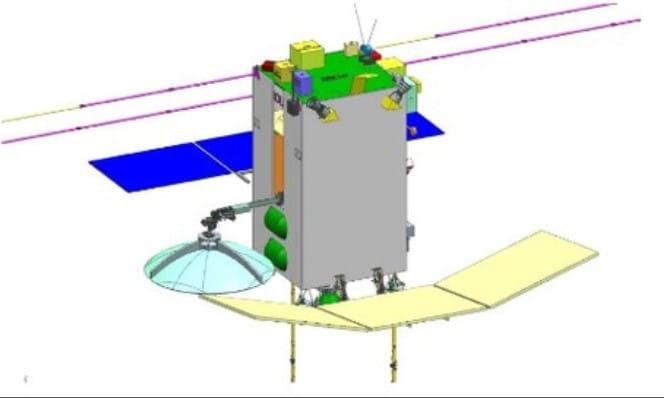
Photo: IANS
India is preparing to enter a new phase of space exploration, with an ambitious roadmap covering human spaceflight, planetary missions, space stations, reusable rockets and advanced propulsion technologies.
According to a government fact sheet, the upcoming programmes are aimed at strengthening India's capabilities in human spaceflight, deep-space exploration and advanced space infrastructure, while supporting the country's ambition to emerge as a leading global space power.
At the centre of the human spaceflight programme is Gaganyaan, which was approved in January 2019. The programme was expanded and revised in September 2024 with a total outlay of Rs 20,193 crore and now covers eight missions, including precursor missions linked to the planned Bharatiya Antariksh Station (BAS).
Under Gaganyaan, India plans to send three Indian astronauts to a 400-km orbit for a three-day mission. The first uncrewed experimental flight, designed to validate critical technologies and systems including the Vyommitra half-humanoid, is targeted for the fourth quarter of 2026. The first crewed mission is planned for 2027.
India is also working towards establishing its own space station. The five-module Bharatiya Antariksh Station is targeted for operationalisation by 2035, with its first module, BAS-01, planned for launch by 2028.
The station is expected to provide a platform for long-duration human spaceflight, microgravity experiments and advanced orbital operations. It could also give Indian scientists greater opportunities to conduct experiments in space without depending entirely on international platforms.

Orbital docking technology is another important area of development. ISRO is studying the SPADEX-2 and SPADEX-3 missions to advance capabilities required for future missions such as Chandrayaan-4, Gaganyaan and the Bharatiya Antariksh Station.
These technologies could eventually allow spacecraft to dock in orbit, transfer samples and crew members, and move power, fluids and propellant between spacecraft or modules.
India's planetary exploration programme is also expanding beyond the Moon. The Venus Orbiter Mission is targeted for launch in March 2028 and will study the planet's geology, atmosphere and ionosphere. The mission will also demonstrate advanced technologies such as aerobraking and thermal management, which could prove useful for future deep-space missions.
At the same time, ISRO is working on more powerful and potentially reusable launch systems. The agency is developing a 200-tonne-thrust semi-cryogenic engine that could support heavier launch vehicles and increase payload capacity.
A semi-cryogenic booster stage is also being developed for the Launch Vehicle Mark-3 (LVM3), India's current heavy-lift rocket. The new booster is expected to significantly increase the rocket's ability to carry heavier payloads into space.
Reusability is another major focus. ISRO is demonstrating Vertical Take-off and Vertical Landing (VTVL) technology for rocket boosters, a capability that could allow parts of launch vehicles to be recovered and reused, potentially reducing the cost of future launches.
The agency is also developing a partially reusable Next Generation Launch Vehicle (NGLV) powered by LOX-methane propulsion. The system is intended to offer greater payload capacity while enabling more frequent and cost-effective launches.
Under the Reusable Launch Vehicle programme, ISRO is developing a winged Orbital Re-entry Vehicle designed to demonstrate controlled re-entry from orbit and runway landing. Successful development could mark an important step towards reusable space transportation.
ISRO is further working on air-breathing propulsion and a technology demonstrator vehicle. Such technologies could improve the efficiency of atmospheric flight and contribute to the development of advanced reusable launch systems.
Taken together, these programmes indicate that India's space ambitions are moving beyond individual satellite and planetary missions towards a broader ecosystem covering human spaceflight, orbital infrastructure, reusable launch technology and long-duration exploration.
The combination of Gaganyaan, the planned Bharatiya Antariksh Station, Venus exploration, advanced propulsion and reusable launch vehicles could significantly expand India's ability to conduct complex missions independently and strengthen its position in the increasingly competitive global space sector.



© Copyright
Reporter Post.All Rights Reserved |
Powered by: Aptilogic Software |
 |
Page rendered in 0.0968 seconds.
|
Page rendered in 0.0968 seconds.