Mon, August 31, 2026

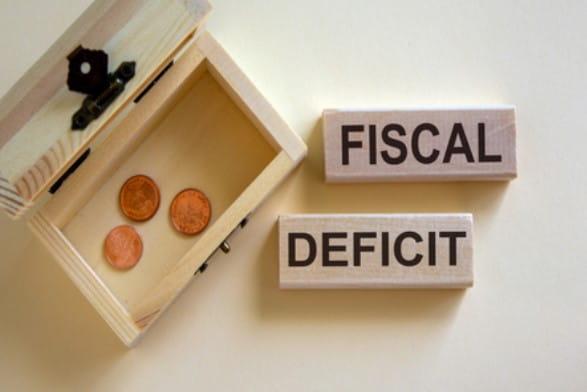
Photo: IANS
India’s fiscal position showed improvement during the opening four months of financial year 2026-27, with the Centre’s fiscal deficit narrowing to Rs 4.55 lakh crore by the end of July, according to government data released on Monday.
The deficit during April-July amounted to 26.8 per cent of the full-year target, lower than the 29.9 per cent recorded during the corresponding period of the previous financial year. In absolute terms, the fiscal deficit stood at Rs 4.7 lakh crore in April-July last year.
The latest figures indicate that government finances have started the current fiscal on a relatively stronger footing, helped in part by robust non-tax revenues, including the substantial dividend transferred by the Reserve Bank of India (RBI).
During April-July, the government collected total receipts of Rs 13.07 lakh crore, equivalent to 35.8 per cent of the budget estimate for the entire financial year. Total expenditure stood at Rs 17.62 lakh crore, or 32.9 per cent of the annual budget estimate.
For comparison, receipts during the same period last year had reached 31.3 per cent of the corresponding budget estimate, while expenditure stood at 30.9 per cent.
Revenue receipts in the first four months of FY27 amounted to Rs 12.68 lakh crore. Tax revenue contributed Rs 8.45 lakh crore, while non-tax revenue stood at Rs 4.23 lakh crore.
The strong performance of non-tax revenue has been an important factor supporting the government's fiscal position. This category includes dividends and profits transferred by public sector enterprises, spectrum-related receipts and various fees and charges collected by the government. Dividends received from the RBI also form part of non-tax revenue.
The RBI approved a record dividend transfer of Rs 2.87 lakh crore to the Centre, higher than the Rs 2.69 lakh crore transferred a year earlier. The larger payout has provided an additional boost to government receipts and helped contain the fiscal deficit during the period.
The revenue deficit, meanwhile, stood at Rs 43,645 crore, representing 7.4 per cent of the budgeted target for the full financial year.
The government's focus on fiscal consolidation has continued after it achieved its fiscal deficit target of 4.4 per cent of GDP in FY26. For FY27, the Centre has set a slightly lower fiscal deficit target of 4.3 per cent of GDP.
However, emerging expenditure pressures could test the government's fiscal discipline later in the year. Higher petroleum product and fertiliser prices amid the continuing West Asia crisis could increase the subsidy burden and push up government spending.
A sustained improvement in the fiscal deficit is generally viewed as positive for the broader economy because it can reduce the government's borrowing requirement. Lower government borrowing can potentially leave more financial resources available with banks and other lenders for businesses and consumers, supporting private investment and consumption.
For now, the April-July numbers suggest that the Centre remains broadly on track with its fiscal consolidation roadmap. The challenge will be to maintain this momentum through the rest of FY27 while managing potential increases in subsidies and other expenditure pressures.



© Copyright
Reporter Post.All Rights Reserved |
Powered by: Aptilogic Software |
 |
Page rendered in 0.0911 seconds.
|
Page rendered in 0.0911 seconds.