Tue, August 25, 2026



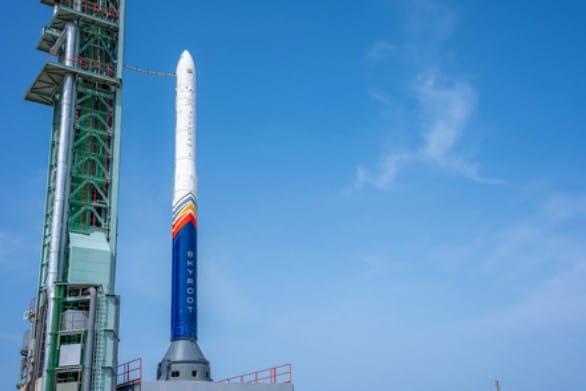
Photo: IANS
India’s emerging private space industry has achieved a milestone that several European commercial launch projects are yet to match, with Skyroot Aerospace becoming the country’s first private company to place a domestically developed rocket into orbit, according to a report by The European Conservative.
Skyroot Aerospace successfully launched its Vikram-1 rocket in July, deploying multiple payloads into low Earth orbit. While the launcher is relatively small compared with major systems operated by the United States, China and Russia, the achievement highlights the growing capabilities of India’s private space sector.
The report said India’s entry into the commercial launch market could provide additional competition and launch capacity while offering a new benchmark for Europe’s space industry. With the US and China continuing to dominate the global commercial launch market, India’s emergence as a private-sector launch player could give international customers another option.
It suggested that European operators could explore partnerships with Indian companies for commercial, university and scientific missions. Such cooperation could help diversify the international launch market, which remains heavily reliant on American launch providers.
Europe has increased its launch activity following the introduction of the Ariane 6 and Vega-C rockets. However, the region still accounts for only a small share of a global market dominated by the US and China.
The report also pointed to a possible launch capacity crunch for European strategic programmes, including Galileo and Copernicus, between 2029 and 2031. Growing mission requirements could place additional pressure on the launch infrastructure available to European operators. At the same time, several state-backed private launcher projects in Europe are yet to establish regular operational orbital services.
India’s progress comes after decades in which the country’s space programme was largely led by the state. The Indian Space Research Organisation (ISRO) developed indigenous launch capabilities over several decades, with the country achieving major milestones including the Mars Orbiter Mission in 2014 and the Chandrayaan-3 landing near the Moon’s south polar region in 2023.
A major shift came in 2020, when the Indian government opened the space sector to private companies and established IN-SPACe to help private players access public facilities, testing infrastructure and launch sites. The 2023 space policy further defined the roles of ISRO, public-sector commercial activities and private space companies.
The policy changes have helped create a rapidly expanding private space ecosystem. According to the report, India now has more than 400 space startups and is aiming to grow the value of its space economy from around $8.4 billion in 2022 to $44 billion by 2033, with exports expected to account for about $11 billion.
Skyroot’s orbital achievement therefore represents more than a single successful launch. It signals the growing ability of Indian private companies to develop and operate indigenous space hardware and could strengthen India’s position as an emerging player in the increasingly competitive global commercial space market.




© Copyright
Reporter Post.All Rights Reserved |
Powered by: Aptilogic Software |
 |
Page rendered in 0.1139 seconds.
|
Page rendered in 0.1139 seconds.