Tue, August 25, 2026


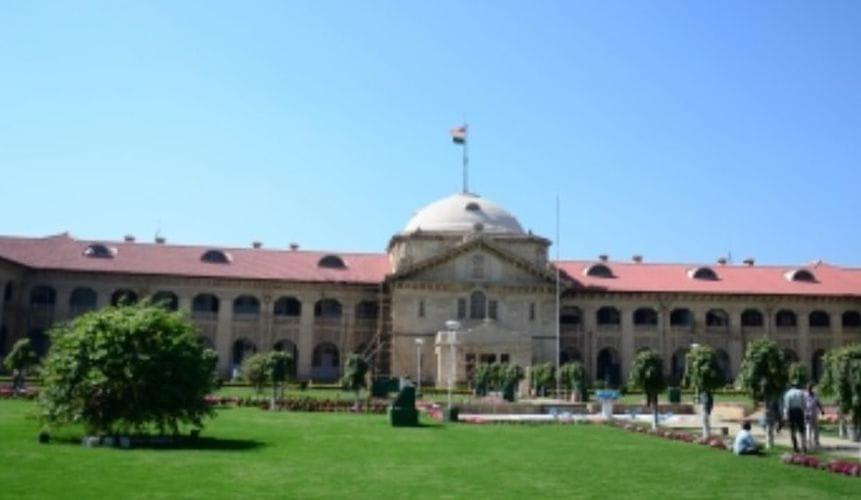
Photo: IANS
A fresh political debate has erupted over the wearing of hijab in educational institutions after the Allahabad High Court ruled that students cannot insist on changing or modifying a school's prescribed dress code according to their personal preferences.
The court dismissed a petition filed on behalf of a minor girl from a private school in Prayagraj, who had sought permission to wear a headscarf along with the uniform prescribed by the institution.
The student had completed her high school education and was seeking admission to Class 11 in the same school. The case has since triggered a wider discussion over where institutional rules end and an individual's right to practise and express religious beliefs begins.
Supporters of the judgment have argued that schools have the authority to prescribe uniforms and establish rules intended to maintain discipline and a sense of equality among students. Those opposing the strict interpretation of the dress code have maintained that following a uniform should not prevent students from observing their faith.
BJP leader Mukhtar Abbas Naqvi said the issue should not be turned into a source of communal tension. He said educational institutions have their own dress codes, discipline and regulations and that such rules should be respected.
Communist Party of India MP P. Santhosh Kumar took a different position, saying that while uniforms are important for creating a sense of equality, students should also be able to retain their religious identity. He argued that an individual's right to believe in and practise their chosen faith should not be undermined.
Vishva Hindu Parishad national spokesperson Vinod Bansal strongly supported the court's position. He said courts have considered questions surrounding hijab and burqa on several occasions and argued that schools should promote equality, unity, integrity and brotherhood rather than create distinctions based on religious identity.
Bansal also questioned the repeated litigation over the issue and said the judiciary had already dealt with several aspects of the hijab debate.
Congress leader Shakeel Ahmad Khan, however, described head covering as a matter of personal choice. He pointed out that covering the head is not limited to one community and cited traditions such as the ghoonghat and odhni as examples of head-covering practices found in Indian society.
Khan acknowledged that schools have the right to frame their own rules but argued that students who wish to cover their heads should be allowed to do so. He also said the issue was being given disproportionate attention when there were other important matters requiring public focus.
Senior advocate and BJP leader Nalin Kohli said the Allahabad High Court's decision appeared to be in line with previous Supreme Court rulings dealing with the concept of the "essential practices" of religion.
Kohli emphasised that students generally attend non-religious schools primarily for education and that such institutions can prescribe a common uniform. He also referred to Article 26 of the Constitution, which provides religious denominations certain rights relating to establishing and administering institutions for religious and charitable purposes.
According to Kohli, families seeking an education environment based on particular religious principles have the option of choosing institutions established for that purpose. However, he said students in schools that are not founded on religious principles would ordinarily be expected to follow the uniform prescribed by the institution.
The controversy once again brings into focus a difficult question for India's education system: how schools can maintain common standards and discipline while accommodating legitimate expressions of religious belief. The Allahabad High Court's ruling is likely to keep the debate alive, particularly as courts and educational institutions continue to grapple with questions surrounding dress codes, religious freedom and individual rights.




© Copyright
Reporter Post.All Rights Reserved |
Powered by: Aptilogic Software |
 |
Page rendered in 0.1012 seconds.
|
Page rendered in 0.1012 seconds.