Thu, April 16, 2026

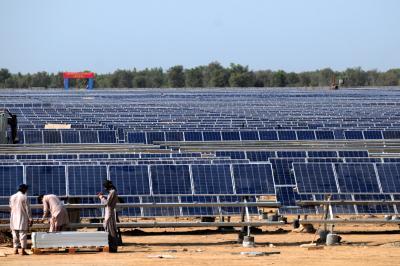
A new report has raised concerns among developing regions about the long-term impact of relying on China’s renewable energy technology. Countries across Africa, South Asia, and Latin America are reportedly questioning both the quality of imported equipment and the financial structures tied to these projects.
According to the Nepal Aaja report, Chinese solar panels, wind turbines, and battery systems are often criticised for being poorly adapted to local environmental conditions. While they may be cost-effective upfront, several countries have reported frequent breakdowns, shorter lifespans, and higher maintenance costs over time.
A key issue highlighted is China’s financing model. Loans are typically structured in a way that requires recipient nations to purchase Chinese-made equipment. This creates a long-term dependency—not just on hardware, but also on spare parts, technical expertise, and after-sales services from Chinese providers.
The report also points to inefficiencies in integrating these technologies into local power grids, leading to delays and additional repair costs. In some cases, wind turbines supplied to Latin American countries have been criticised for durability issues when compared to European alternatives.
China’s dominance in renewable energy exports is partly driven by state-supported overcapacity, allowing it to offer lower prices globally. However, critics argue that this strategy prioritises volume over long-term sustainability, resulting in systems that may not meet the evolving needs of recipient countries.
Beyond technical and financial concerns, the report suggests broader geopolitical implications. Heavy reliance on Chinese energy infrastructure could limit the strategic flexibility of developing nations, making it harder for them to balance relationships with other global powers.
Some leaders in Africa and Latin America have described these arrangements as a form of “neo-mercantilism,” where energy partnerships extend into political and economic influence—impacting areas such as trade negotiations, infrastructure expansion, and even voting patterns in international forums.
Overall, the findings highlight a growing debate: while Chinese renewable energy investments are helping expand access to power, questions remain about their long-term reliability, sustainability, and strategic implications for the Global South.
With inputs from IANS




| 14-09-2018 | ||||||
| Sl No. | Parameters | Actual Data(µg/m3) | Standard Limit(µg/m3) |
|---|---|---|---|
| 1 | PM 10 | 64 | 100 |
| 2 | PM 2.5 | 33 | 60 |
| 3 | SO2 | 55.3 | 80 |
| 4 | NO2 | 58.2 | 80 |
| 14-09-2018 | ||||||
| Station | Temperature(degree centigrade) | Rainfall(mm) | Relative humidity(%) | |||
|---|---|---|---|---|---|---|
| Max | Min | Past 24 hrs. | Since 1st March, 2018 | Max | Min | |
| Ranchi | 31.0 | 22.5 | 000.0 | 1010.1 | 95 | 66 |
| Jamshedpur | 34.1 | 26.2 | 000.0 | 1252.8 | 87 | 58 |
| Bokaro | 33.5 | 24.6 | 015.2 | 824.0 | 92 | 79 |
| Daltonganj | 32.6 | 24.9 | 004.2 | 960.9 | 95 | 67 |
© Copyright
Reporter Post.All Rights Reserved |
Powered by: Aptilogic Software |
 |
Page rendered in 0.0632 seconds.
|
Page rendered in 0.0632 seconds.