Fri, October 02, 2026

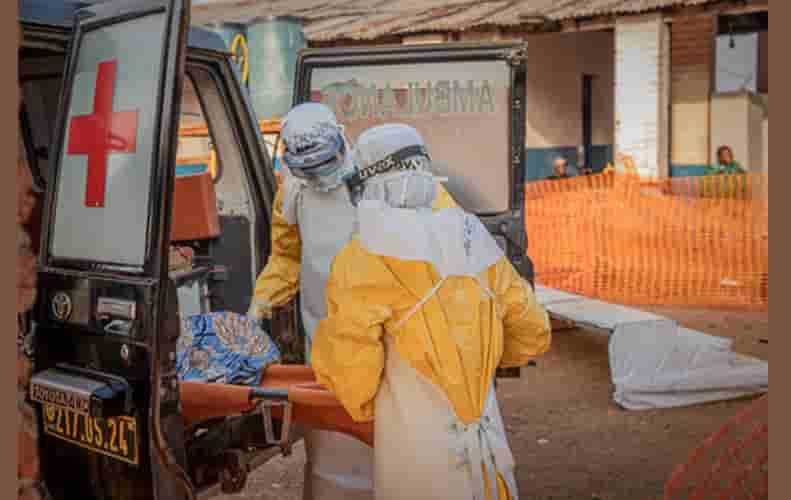
Photo: IANS
The death toll from the ongoing Ebola outbreak in the Democratic Republic of the Congo (DRC) has crossed 4,000, with 4,018 deaths recorded among 8,300 confirmed cases across seven provinces, according to the latest figures released by the Congolese Ministry of Health on Friday.
A total of 2,162 patients have recovered, while the reported case fatality rate stands at 48.4 per cent, Xinhua News Agency reported.
However, the actual number of deaths and infections could be higher than the official figures. International medical charity Médecins Sans Frontières (MSF) warned on Thursday that gaps in disease surveillance and case detection may mean that some cases are going unreported.
The current outbreak has become the largest and deadliest Ebola outbreak ever recorded in the DRC and is the second-largest Ebola outbreak globally, behind the 2014-2016 epidemic in West Africa.
Health officials have also cautioned against interpreting the recent decline in reported cases as evidence that the outbreak is under control.
The Africa Centres for Disease Control and Prevention (Africa CDC) said the outbreak has expanded significantly since mid-May, when infections were reported in three health zones. It has now spread to 63 health zones across seven provinces, with 45 health zones still reporting active transmission.
Africa CDC official Wessam Mankoula, speaking during an online press briefing on Thursday, said the epidemic curve had largely plateaued over the past four to five weeks and reported cases fell during the latest week. However, he warned that the decline could partly reflect weaknesses in disease surveillance rather than a sustained reduction in transmission.
“Falling in this curve doesn't mean that the outbreak is totally under control,” Mankoula said.
Insecurity and resistance within some communities have complicated efforts to identify cases, trace contacts and maintain other disease-control measures. Health agencies are concerned that these challenges could allow infections to go undetected and make the reported figures an incomplete picture of the outbreak.
The latest developments underline the continuing challenges facing health authorities as they attempt to contain transmission across a growing number of affected areas. Continued surveillance, rapid detection and access to affected communities remain critical to determining the actual scale of the outbreak and limiting further spread.



© Copyright
Reporter Post.All Rights Reserved |
Powered by: Aptilogic Software |
 |
Page rendered in 0.0119 seconds.
|
Page rendered in 0.0119 seconds.