Mon, September 28, 2026
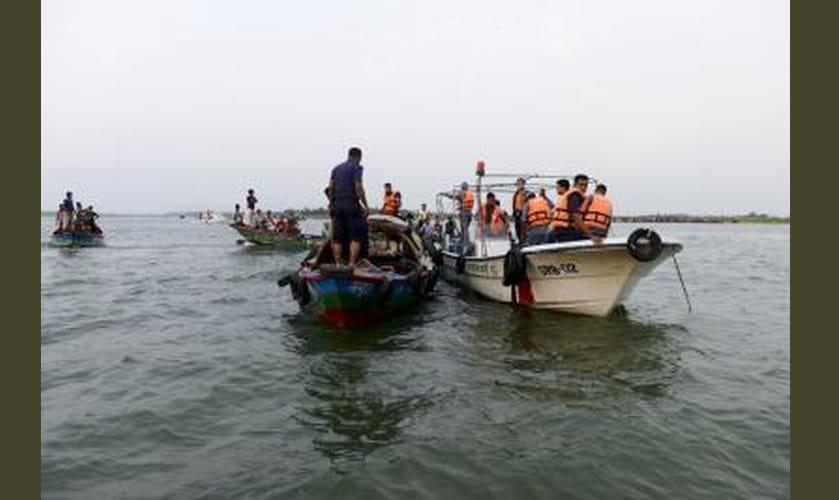
Photo: IANS
As concerns over law and order continue in Bangladesh, police have recovered 920 bodies from rivers across the country in the 20 months through August 2026, according to River Police data cited by local media.
The grim figures have triggered concern among criminologists and human rights activists, who fear that rivers are increasingly being used to dispose of bodies and destroy evidence after serious crimes, including murder.
According to the Bangladesh River Police data reported by the Dhaka-based daily ‘New Age’, 541 bodies were recovered from rivers across the country in 2025, while another 379 were recovered between January and August this year.
The figures indicate a continuing rise in river-body recoveries. River Police data reported by Bangladeshi media shows that the number increased from 318 in 2021 to 360 in 2022, 405 in 2023, 440 in 2024 and 541 in 2025.
Criminologists and rights activists have warned that dumping a body in a river can make investigations considerably more difficult. A weighted body may remain submerged for some time before resurfacing, while currents can carry remains far from the location where a crime occurred.
The problem extends beyond river recoveries. Bodies are also found along roads, railway tracks, fields and other isolated locations, sometimes after being dismembered, making identification and investigation more difficult.
The human rights organisation Manabadhikar Shongskriti Foundation (MSF) said at least 42 unidentified bodies were recovered from riverbanks, roads, railway lines, fields and other locations across Dhaka and elsewhere during the first 20 days of September 2026.
MSF data further showed that 465 unidentified bodies were recovered between January and August this year, according to ‘New Age’.
One recent case was reported on September 14, when police recovered the body of an unidentified man from the Bangshi River after locals spotted it floating near a playground in Depashai Noapara of Sambhog union.
Shahidul Islam, Inspector (Investigation) at Dhamrai police station, said the identity of the deceased remained unknown and an unnatural death case had been registered.
A Police Bureau of Investigation team later attempted to collect fingerprints to establish the man's identity but was unsuccessful. Police subsequently collected a DNA sample before the body was buried as unidentified, ‘New Age’ reported.
MSF Chief Executive Saidur Rahman said the organisation's analysis suggested that many of the bodies recovered from rivers appeared to have been dumped after the victims were killed elsewhere.
He said the suspected motives in such cases included land, family, financial and political disputes, while stressing that registering a case as an unnatural death should not end the state's responsibility to establish what happened.
The growing number of unidentified and recovered bodies has consequently raised questions not only about crime detection but also about the ability of investigators to establish the identities of victims and determine the circumstances of their deaths.



© Copyright
Reporter Post.All Rights Reserved |
Powered by: Aptilogic Software |
 |
Page rendered in 0.019 seconds.
|
Page rendered in 0.019 seconds.