Wed, September 30, 2026

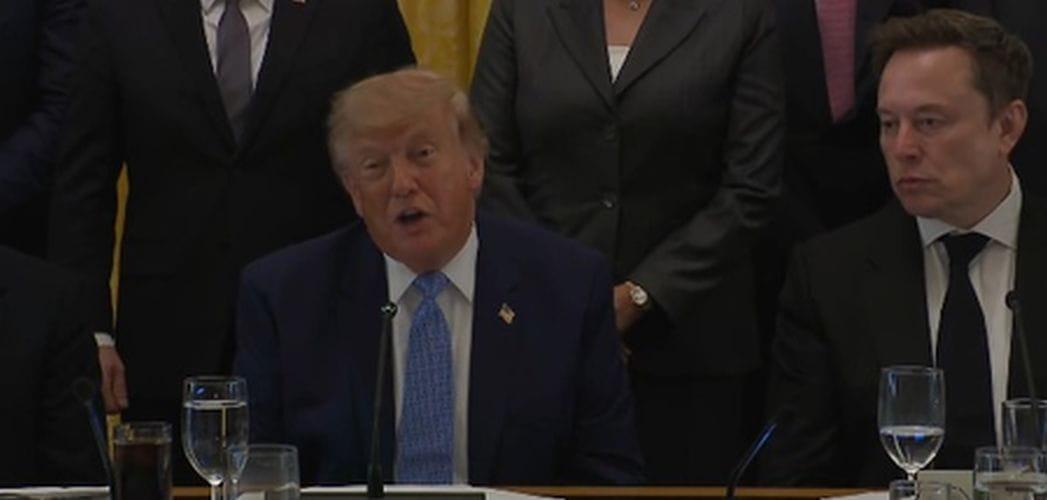
Photo: IANS
Some of the world's biggest technology companies have agreed to strengthen safeguards for increasingly powerful artificial intelligence systems, including internal risk assessments, independent audits and oversight by their boards.
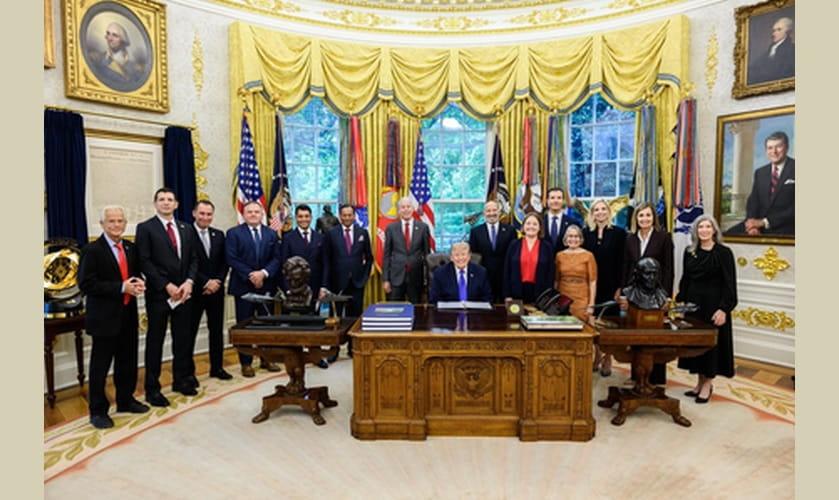
The commitments were discussed at a White House meeting with US President Donald Trump, bringing together executives from companies at the centre of the global race to develop advanced AI and so-called superintelligence.
While the companies differ on how the risks from increasingly capable AI systems should be addressed, their executives outlined a common approach focused on multiple layers of oversight.
Meta CEO Mark Zuckerberg described the understanding as a White House accord aimed at giving users and the public greater confidence in how the technology is developed and deployed.
“The basic idea is that we wanna give the American people and our customers confidence that the technology works in the way that we intend,” Zuckerberg said.
He said the companies had agreed to a set of principles and commitments involving stronger internal controls and mechanisms for identifying potential problems.
The proposed safeguards would include several levels of review, starting with companies' own risk assessments and extending to external auditors and evaluators. Company boards would then independently review reports prepared by those auditors.
Zuckerberg stressed that the agreement was intended as a starting point rather than a final framework for AI governance.
Google CEO Sundar Pichai described the development as “historic and consequential”, saying the industry recognised both the potential benefits of advanced AI and the risks associated with the technology.
“We have to make sure we are addressing the risks, and the president has asked us as an industry to step up,” Pichai said.
Anthropic CEO Dario Amodei similarly highlighted the dual nature of advanced AI, saying the technology could deliver significant benefits while also presenting “very real risks”.
“The mechanism, how we address those risks is still under discussion,” Amodei said, calling for companies to work together on developing the technology safely.
Nvidia CEO Jensen Huang said technological progress and safety measures should not be viewed as competing objectives.
“There’s no conflict between innovation, technology and safety,” Huang said, adding that the technology should be developed responsibly.
Trump, meanwhile, emphasised the role of industry self-policing and said companies would be responsible for monitoring one another.
The meeting also highlighted the growing strategic competition between the United States and China over AI infrastructure. Trump argued that excessive restrictions on AI development and data-centre construction in the US could encourage companies to invest elsewhere.
Trump also said he was close to selecting a “super intelligence czar” and expected to announce the appointment within the next three or four days. He said he planned to consult technology companies and congressional leaders before making the decision.
The scale of investment required to build advanced AI infrastructure was highlighted by Huang, who described the expansion as “the largest industrial revolution in history”. He pointed to new semiconductor plants, computing facilities and AI-focused data centres being developed in the US.
The potential impact of advanced AI on employment was another issue raised during the meeting.
Elon Musk said AI and automation would transform the labour market, comparing the transition with previous technological changes that displaced some occupations while creating new ones. He predicted that widespread AI and robotics could eventually lead to an era of significantly greater material abundance.
Musk also pointed to potential advances in healthcare, arguing that the combination of robotics and superintelligence could eventually make advanced medical care more widely accessible.
The discussions reflect the growing effort among governments and technology companies to establish safeguards as AI systems become more capable, while competition over computing infrastructure, investment and technological leadership continues to intensify.



© Copyright
Reporter Post.All Rights Reserved |
Powered by: Aptilogic Software |
 |
Page rendered in 0.0097 seconds.
|
Page rendered in 0.0097 seconds.