Mon, September 07, 2026

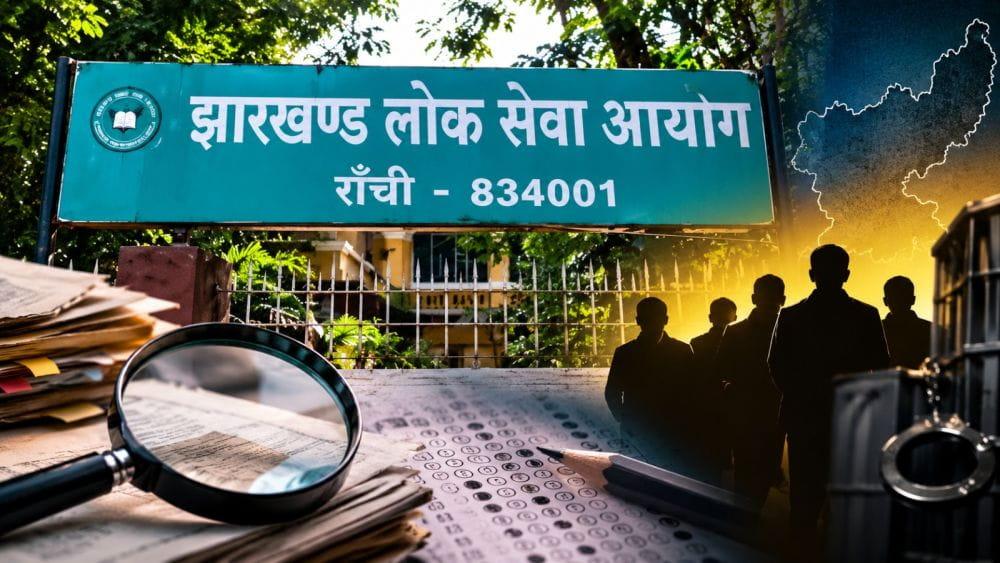
Photo: Reporter Post
The investigation into alleged irregularities and a merit scam in examinations conducted by the Jharkhand Public Service Commission (JPSC) has widened, with the CID identifying seven more suspects who are now under its scanner.
The development comes after the arrest of 20 accused persons, including former JPSC chairman L Khiyangte. Investigators are now focusing on the seven suspects who have so far managed to evade arrest. Over the past five days, CID teams have conducted several raids at locations where the suspects were believed to be staying, but none could be apprehended.
According to sources, the agency may approach the special court for arrest warrants if the suspects do not appear before investigators soon. If they continue to remain unavailable, the CID could subsequently seek permission for attachment of their properties.
The investigation is being conducted in connection with CID police station case number 16/2026. Investigators reportedly identified the seven names while examining statements of arrested accused persons, seized documents and digital evidence.
The suspects have been identified as Aditya Pandey of Namkum, Pawan Kumar Singh of Tatisilwai, Ravishankar Kumar and Santosh Kumar Singh of Palamu, Sanand Prakash of Bokaro, Lalu Kumar Yadav of Hazaribagh and Saurabh Kumar Pandey of Giridih.
The CID is examining their alleged links to various aspects of the examination process, including suspected question-paper leaks, manipulation of OMR sheets, illegal financial transactions and alleged arrangements to help candidates clear examinations through unfair means.
However, these allegations are still part of the ongoing investigation and can be established only after the probe is completed and the evidence is examined by the appropriate authorities.
Digital trail becomes key focus of investigation
The CID is now attempting to reconstruct the entire alleged examination network rather than limiting the investigation to individual arrests.
Mobile phones and other electronic devices seized during the probe are being subjected to forensic examination. Investigators are studying call-detail records and other digital activity to establish who was in contact with whom before the examinations and whether there was a coordinated network for allegedly providing questions or answers to candidates.
Documents linked to Vinay Shah and Anish Kumar are also being examined. The agency is reportedly collecting details of SIM cards issued using their identity documents to determine whether additional mobile numbers were being operated in their names.
Investigators suspect that people involved in the alleged network may have used multiple phone numbers to avoid detection. Establishing the digital trail could therefore prove important in identifying other individuals who may have been involved.
Investigation stretches from Asansol to Kathmandu
The CID has also begun verifying locations mentioned in statements recorded during the investigation and in the FIR.
These include the Sindhi Hotel in Asansol, a marriage hall in Niamatpur, as well as locations in Muzaffarpur, Ranchi, Mandu, Delhi and Kathmandu in Nepal.
Investigators are looking into allegations that some candidates were taken to these locations two or three days before the examination, where they were allegedly made to memorise questions and answers.
The agency is conducting physical verification of these locations and examining whether CCTV footage, accommodation records, communication records or other material evidence could help establish what happened there.
Old JSSC CGL investigation also comes under fresh scrutiny
The CID has simultaneously reopened several lines of inquiry connected with the earlier investigation into the JSSC CGL examination.
Investigators are revisiting 12 important technical and investigative points recorded in the case diary in October 2025. The fresh scrutiny could help determine whether there were links between the earlier examination-related irregularities and the network now being investigated in the JPSC case.
The investigation has consequently moved beyond the question of who allegedly manipulated the examination process. The CID is now attempting to establish the structure of the suspected network, identify those who may have played key roles, trace the alleged flow of money and determine how candidates were allegedly provided an unfair advantage.
The coming days could therefore be significant for the investigation, particularly if the agency succeeds in establishing links between the newly identified suspects, previously arrested accused persons and the wider network allegedly operating around competitive examinations in Jharkhand.



© Copyright
Reporter Post.All Rights Reserved |
Powered by: Aptilogic Software |
 |
Page rendered in 0.1122 seconds.
|
Page rendered in 0.1122 seconds.