
Sun, June 21, 2026





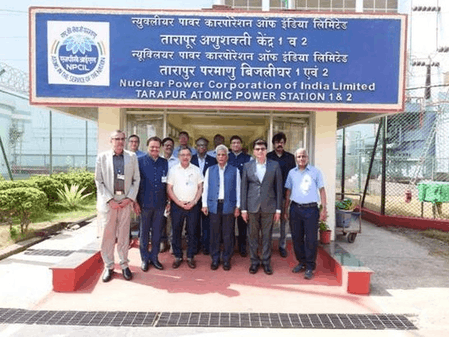
New Delhi: India's oldest nuclear power reactors at the Tarapur Atomic Power Station (TAPS) have resumed electricity generation after undergoing an extensive modernisation and refurbishment programme, marking a significant milestone for the country's nuclear energy sector.
According to a report by World Nuclear News, the first two units of the Tarapur plant—among the world's oldest operating nuclear reactors—have been successfully reconnected to the national power grid. Operated by the Nuclear Power Corporation of India Limited (NPCIL), the two boiling water reactor (BWR) units were originally commissioned in 1969.

The reactors, whose gross generation capacity had earlier been reduced from 200 MWe to 160 MWe, had remained shut since 2020 to facilitate comprehensive refurbishment and safety upgrades.
NPCIL described the successful restart as a major achievement for India's nuclear power programme, saying it reflects the enduring legacy of the country's first nuclear power station and showcases the technical expertise and commitment of its workforce.
The Atomic Energy Regulatory Board (AERB) approved the restart of Unit 2 on May 7 after confirming the completion of all refurbishment activities. The overhaul included the complete replacement of reactor coolant recirculation piping with advanced corrosion-resistant stainless steel forged piping and fittings, significantly enhancing the plant's long-term reliability.

The upgrade also introduced several important safety improvements, including a reactor containment filtered venting system and an alternate cooling water system, further strengthening operational safety.
The development comes as India moves ahead with ambitious plans to expand its nuclear energy capacity. The proposed Sustainable Harnessing and Advancement of Nuclear Energy for Transforming India (SHANTI) Bill, 2025 is expected to provide a modern legal framework for the sector by replacing both the Atomic Energy Act, 1962 and the Civil Liability for Nuclear Damage Act, 2010. The legislation aims to streamline regulations governing nuclear development, safety, security, safeguards and liability, while accelerating project implementation.
According to a recent industry assessment, India's installed nuclear power capacity is projected to rise gradually to around 22 gigawatts (GW) by FY2032 as ongoing and planned projects are completed.
With inputs from IANS





| 14-09-2018 | ||||||
| Sl No. | Parameters | Actual Data(µg/m3) | Standard Limit(µg/m3) |
|---|---|---|---|
| 1 | PM 10 | 64 | 100 |
| 2 | PM 2.5 | 33 | 60 |
| 3 | SO2 | 55.3 | 80 |
| 4 | NO2 | 58.2 | 80 |
| 14-09-2018 | ||||||
| Station | Temperature(degree centigrade) | Rainfall(mm) | Relative humidity(%) | |||
|---|---|---|---|---|---|---|
| Max | Min | Past 24 hrs. | Since 1st March, 2018 | Max | Min | |
| Ranchi | 31.0 | 22.5 | 000.0 | 1010.1 | 95 | 66 |
| Jamshedpur | 34.1 | 26.2 | 000.0 | 1252.8 | 87 | 58 |
| Bokaro | 33.5 | 24.6 | 015.2 | 824.0 | 92 | 79 |
| Daltonganj | 32.6 | 24.9 | 004.2 | 960.9 | 95 | 67 |
© Copyright
Reporter Post.All Rights Reserved |
Powered by: Aptilogic Software |
 |
Page rendered in 0.0698 seconds.
|
Page rendered in 0.0698 seconds.