Wed, August 26, 2026

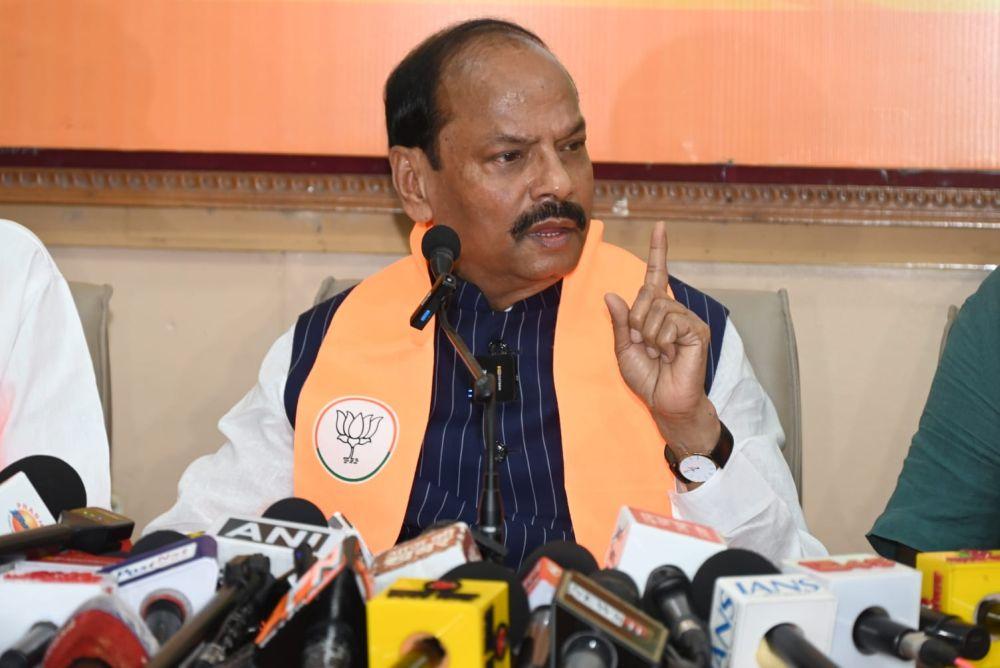
Photo: Reporter Post
Former Jharkhand Chief Minister Raghubar Das has defended the MMDR (Mines and Minerals (Development and Regulation)) Amendment Bill, 2026, calling it a measure in the interest of both Jharkhand and the nation. He accused the Jharkhand Mukti Morcha (JMM) and Congress of deliberately misinterpreting the legislation and creating confusion among the people.
Addressing a press conference at the BJP state office, Das said the amendment would help Jharkhand make better use of its mineral resources, encourage legal mining and bring greater transparency to the sector. He said the legislation should be viewed in the broader context of investment, employment, industrial growth and long-term revenue generation.
Das argued that the debate should not be limited to the issue of an estimated Rs 11,000 crore cess. According to him, the larger question is whether Jharkhand should create an environment of "fiscal uncertainty" that could discourage investment, reduce mining activity and affect employment opportunities.
He said around 90 per cent of the taxes and statutory payments generated by the mining sector continue to accrue directly to the states. He also stressed that the interests of tribal communities, the District Mineral Foundation Trust (DMFT) and the state's legitimate revenue must remain protected.
The former Chief Minister sharply criticised the state government's handling of illegal mining. He alleged that coal, sand and stone syndicates are operating in districts such as Dhanbad, Bokaro, Chatra, Hazaribagh, Sahibganj, Dumka and Shikaripara. He accused the JMM-Congress government of failing to effectively control illegal mining and alleged that natural resources were being exploited by organised syndicates.
Das also questioned the government's performance in operationalising mining blocks. He said the Centre had approved 34 coal blocks for operation in Jharkhand, but only four have become operational so far, while 30 remain unopened. Similarly, he claimed that only six of 15 iron ore mines and 17 of 37 bauxite mines are currently operational.
He argued that putting these blocks and mines into production through transparent processes could significantly increase state revenue while creating employment opportunities for local communities.
Comparing Jharkhand with Odisha, Das said the neighbouring mineral-rich state has been able to generate substantially higher mining revenue through faster auctions and mine operations. He cited a revenue target of around Rs 60,000 crore for Odisha in 2025-26, compared with Jharkhand's target of Rs 18,844 crore.
Das also raised questions about the utilisation of DMFT funds. He claimed that more than Rs 7,915 crore out of a total DMFT collection of around Rs 18,250 crore remains unspent, while 2,487 projects have either stalled or become inactive.
He pointed to several mining-affected districts where large amounts of DMFT funds allegedly remain unused. According to the figures cited by him, Rs 2,393.58 crore in Dhanbad, Rs 1,802.82 crore in Chaibasa, Rs 1,055.40 crore in Chatra, Rs 527.88 crore in Pakur and Rs 518.82 crore in Ramgarh have not been utilised.
Das said the continued lack of adequate healthcare, drinking water and other basic facilities in mining-affected areas raises questions about how effectively these funds are being used. He argued that DMFT money should primarily strengthen hospitals, schools, drinking-water systems, roads and other essential infrastructure in areas affected by mining.
He also highlighted what he described as a decline in legal coal production. Citing government figures, Das said coal production during April-July fell from 44.78 million tonnes in 2024-25 to 37.25 million tonnes during the corresponding period of 2025-26.
According to him, a decline in legal mining directly affects the state's royalty and other legitimate revenue, while creating greater space for illegal mining. He argued that strengthening the formal mining sector would therefore benefit both government finances and local employment.
Das further claimed that cess and other costs have made Jharkhand's coal and iron less competitive compared with mineral-producing states such as Odisha and Chhattisgarh. He said higher costs could reduce demand for Jharkhand's minerals and make illegal mining comparatively more attractive.
He argued that making legal mining economically viable and establishing a transparent, formal supply chain could eliminate the price advantage enjoyed by illegal operators. A stronger legal mining sector, he said, would generate revenue through royalties, auction premiums and DMFT contributions while also supporting employment and downstream industries.
Das also pointed to the expiry of mining leases as another area of concern. He claimed that 26 mining leases had expired in the past six years and argued that timely and transparent auctions could have generated significant revenue for the state. He added that local employment opportunities could also have been created while reducing the scope for illegal mining.
Referring to a Tata Group mine, Das claimed that its lease had expired and that the project had been waiting for approval for around three months.
The former Chief Minister accused the JMM-Congress alliance of opposing the MMDR amendment for political reasons and alleged that the controversy was being used to divert attention from shortcomings in the state's mining administration.
He said Jharkhand's mineral wealth should be converted into sustainable revenue, employment and industrial development, while ensuring that mining-affected communities receive a fair share of the benefits.
"The real issue is not merely the Rs 11,000 crore cess. The larger challenge is to ensure that Jharkhand's mineral wealth translates into investment, jobs, infrastructure and sustainable economic growth," Das said.
State BJP media in-charge Yogendra Pratap Singh and party spokesperson KK Gupta were also present at the press conference.




© Copyright
Reporter Post.All Rights Reserved |
Powered by: Aptilogic Software |
 |
Page rendered in 0.0925 seconds.
|
Page rendered in 0.0925 seconds.