Tue, June 16, 2026





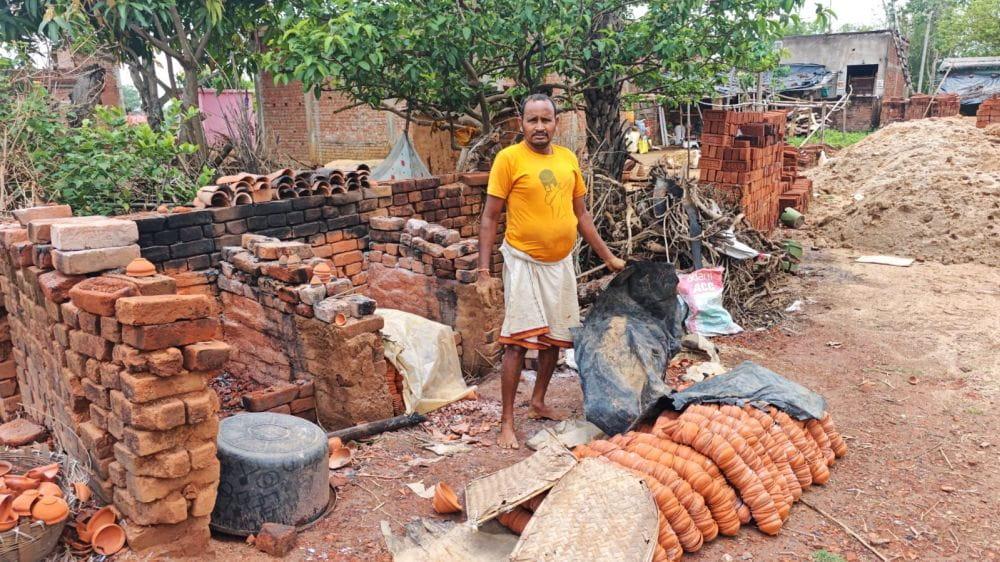
Deoghar: In Kokaribank, a small village near Jasidih in Deoghar—popularly known as the land of Baba Baidyanath—generations of potters are struggling to keep their traditional craft alive. Once known for producing clay cups or kulhads, these artisans now find themselves caught in a deep economic crisis, driven by changing consumer habits, shrinking demand, and little to no institutional support.
Every morning, as the day begins, potter families sit at their wheels, continuing a legacy passed down over decades. A single household spends 8 to 10 hours shaping nearly 1,000 to 1,500 kulhads daily. Even children lend a hand, juggling school with work to support their families.
Despite the intense labor, their earnings barely reach ?400 to ?500 a day—hardly enough to cover basic needs. For many families, even arranging two proper meals remains a daily challenge.
The growing preference for disposable plastic and paper cups has sharply reduced the demand for eco-friendly kulhads, which were once widely used at tea stalls and social gatherings. Today, their presence is fading fast.
Adding to their hardship is the lack of access to government schemes like the Prime Minister Vishwakarma Yojana. While such initiatives exist on paper, villagers say they have yet to see any real benefits. Without proper support or fair pricing, their future remains uncertain.
For Kokaribank’s potters, the question lingers—will their craft survive beyond exhibitions, or will there come a day when their homes no longer struggle for a basic livelihood?






| 14-09-2018 | ||||||
| Sl No. | Parameters | Actual Data(µg/m3) | Standard Limit(µg/m3) |
|---|---|---|---|
| 1 | PM 10 | 64 | 100 |
| 2 | PM 2.5 | 33 | 60 |
| 3 | SO2 | 55.3 | 80 |
| 4 | NO2 | 58.2 | 80 |
| 14-09-2018 | ||||||
| Station | Temperature(degree centigrade) | Rainfall(mm) | Relative humidity(%) | |||
|---|---|---|---|---|---|---|
| Max | Min | Past 24 hrs. | Since 1st March, 2018 | Max | Min | |
| Ranchi | 31.0 | 22.5 | 000.0 | 1010.1 | 95 | 66 |
| Jamshedpur | 34.1 | 26.2 | 000.0 | 1252.8 | 87 | 58 |
| Bokaro | 33.5 | 24.6 | 015.2 | 824.0 | 92 | 79 |
| Daltonganj | 32.6 | 24.9 | 004.2 | 960.9 | 95 | 67 |
© Copyright
Reporter Post.All Rights Reserved |
Powered by: Aptilogic Software |
 |
Page rendered in 0.0702 seconds.
|
Page rendered in 0.0702 seconds.