Wed, May 06, 2026

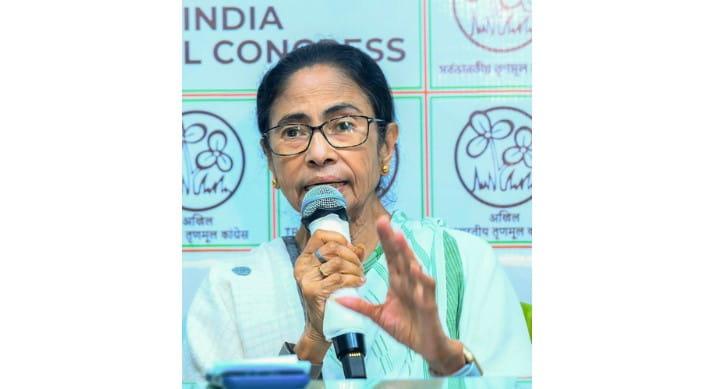
Kolkata: Following the electoral defeat of the Trinamool Congress (TMC), a wave of resignations has begun among advisors serving in the government led by Mamata Banerjee in West Bengal.
The exits come even as Banerjee asserted that she would not submit her resignation to Governor R. N. Ravi. She has contested the legitimacy of the results, claiming that the outcome—including her personal loss from the Bhabanipur Assembly seat—does not reflect the true public mandate and alleging that nearly 100 seats were “stolen.”
Among the most prominent resignations is that of noted economist Abhirup Sarkar, who stepped down from his dual roles as chairman of the West Bengal Industrial Development Corporation (WBIDC) and the West Bengal Small Industries Development Corporation (WBSIDC). Sources indicate that his resignation has already been formally communicated via email.
Two former chief secretaries of the state, Alapan Bandyopadhyay and H. K. Dwivedi, have also resigned from their advisory positions to the outgoing chief minister. Reports suggest that another former chief secretary, Manoj Pant, may have stepped down as principal secretary, though official confirmation is still awaited.
Earlier, former Advocate General Kishore Datta had also resigned from his post.
The practice of appointing retired bureaucrats and senior police officials to advisory roles—often at their last drawn salaries—dates back to 2011, when Banerjee first came to power, ending the long-standing Left Front rule and ushering in the TMC era. She has consistently defended the policy, citing the value of administrative experience in governance.
However, opposition parties, particularly the Bharatiya Janata Party, have criticised the practice, arguing that such appointments placed a financial burden on the state. They have also alleged that these roles were used to reward officials for their conduct while in service—an accusation the ruling party has rejected.
The ongoing resignations signal a broader administrative transition as the state prepares for a change in political leadership.
With inputs from IANS




| 14-09-2018 | ||||||
| Sl No. | Parameters | Actual Data(µg/m3) | Standard Limit(µg/m3) |
|---|---|---|---|
| 1 | PM 10 | 64 | 100 |
| 2 | PM 2.5 | 33 | 60 |
| 3 | SO2 | 55.3 | 80 |
| 4 | NO2 | 58.2 | 80 |
| 14-09-2018 | ||||||
| Station | Temperature(degree centigrade) | Rainfall(mm) | Relative humidity(%) | |||
|---|---|---|---|---|---|---|
| Max | Min | Past 24 hrs. | Since 1st March, 2018 | Max | Min | |
| Ranchi | 31.0 | 22.5 | 000.0 | 1010.1 | 95 | 66 |
| Jamshedpur | 34.1 | 26.2 | 000.0 | 1252.8 | 87 | 58 |
| Bokaro | 33.5 | 24.6 | 015.2 | 824.0 | 92 | 79 |
| Daltonganj | 32.6 | 24.9 | 004.2 | 960.9 | 95 | 67 |
© Copyright
Reporter Post.All Rights Reserved |
Powered by: Aptilogic Software |
 |
Page rendered in 0.1214 seconds.
|
Page rendered in 0.1214 seconds.