Mon, August 31, 2026

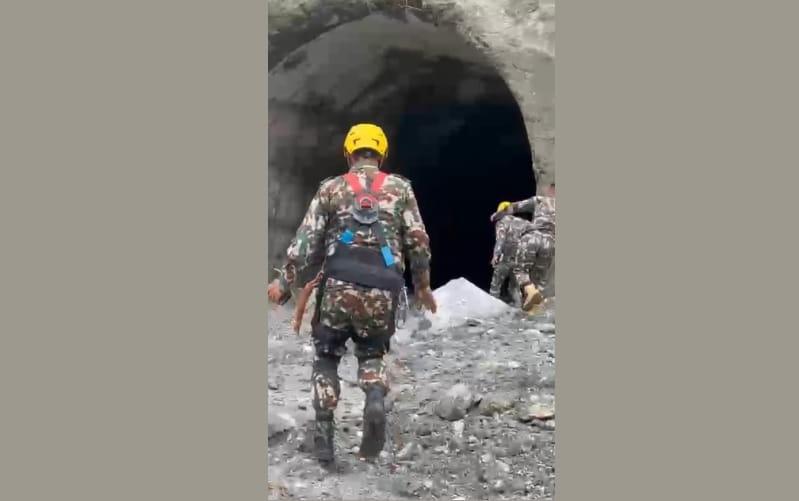
Photo: IANS
A Nepali Army-led rescue operation inside the flood-hit Rasuwagadhi Hydropower Project in Rasuwa has found no people trapped inside the tunnel, while the whereabouts of 93 workers associated with the project remain unknown.
The search was launched after authorities feared that workers may have been stranded deep inside the 111-MW hydropower project's tunnel following severe flooding in the Bhote Koshi River.
The Prime Minister's Secretariat said on Monday that the rescue team, accompanied by engineers and a drone team, searched the tunnel up to its innermost section and endpoint. Drones were also used to inspect areas that were difficult to access.
"However, no signs of human presence were found during the operation," the Prime Minister's Secretariat said.
After reaching the far end of the tunnel and finding no indication that anyone was inside, the rescue team called off the operation and returned to Dhunche in Rasuwa.
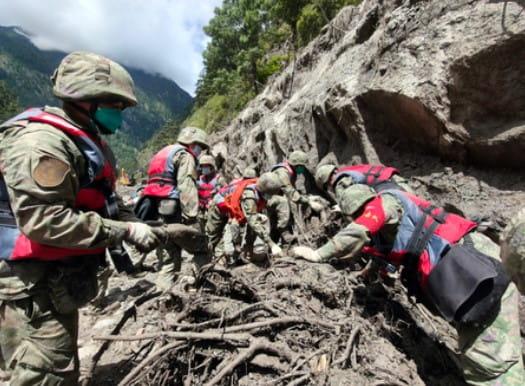
The search at Rasuwagadhi is part of a much wider rescue effort underway across Nepal's flood-affected hydropower sector. Authorities are searching for people believed to have been trapped at 11 hydropower projects located in Rasuwa and Nuwakot along the Bhote Koshi and Trishuli river corridors.
According to the Independent Power Producers' Association, Nepal (IPPAN), 897 people working at the 11 affected hydropower projects remain out of contact. The figure underscores the scale of the humanitarian challenge facing rescue agencies after the floods caused widespread disruption across the region.
The situation has also prompted international cooperation. Nepal's National Disaster Risk Reduction and Management Authority (NDRRMA) said seven Indian nationals and 15 Chinese nationals who had been trapped at hydropower projects were rescued on Sunday.
At the request of the Nepali government, specialist tunnel technicians from India and China have joined local rescue teams to assist with operations inside damaged and flooded underground structures.
An Indian tunnel rescue team continued its operations on Monday, working alongside the Nepali Army at hydropower tunnel sites in the Chilime and Langtang areas, according to the Indian Embassy in Nepal.
"The tunnel rescue team from India worked with the Nepali Army's team to conduct search and rescue operations at hydropower tunnel sites in the Chilime and Langtang areas today," the embassy said, adding that the team would continue its efforts in coordination with Nepal's Army.
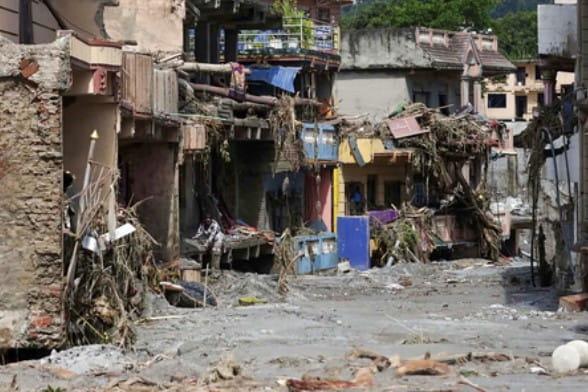
The rescue operations are particularly challenging because flooding in the Bhote Koshi River has affected infrastructure and access routes to several hydropower sites. Tunnels and underground facilities can also be difficult to inspect because of debris, water ingress and damaged access points.
While no one was found inside the Rasuwagadhi tunnel during Monday's search, authorities continue to face the larger task of locating hundreds of people whose current status remains unknown across the affected projects.
The ongoing mobilisation of specialised tunnel teams from neighbouring countries is expected to strengthen Nepal's ability to search underground facilities and reach areas that conventional rescue teams may struggle to access.
The focus now remains on expanding searches across the remaining affected hydropower sites and establishing the whereabouts of those still unaccounted for.



© Copyright
Reporter Post.All Rights Reserved |
Powered by: Aptilogic Software |
 |
Page rendered in 0.1801 seconds.
|
Page rendered in 0.1801 seconds.