Mon, October 12, 2026

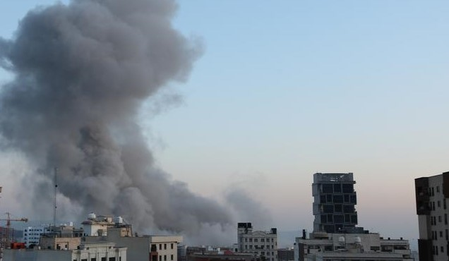
Washington— The United States Central Command (CENTCOM) has confirmed fresh strikes by US forces on Iranian missile positions along the Strait of Hormuz, as part of the ongoing military campaign dubbed Operation Epic Fury.
According to CENTCOM, the strikes targeted hardened missile sites along Iran’s coastline using powerful 5,000-pound deep-penetrator munitions. Officials said the sites housed anti-ship cruise missiles that posed a direct threat to international shipping passing through the critical maritime corridor.
The development marks a sharp escalation in the maritime dimension of the conflict, with the Strait of Hormuz — a vital artery for global oil and trade — emerging as a key flashpoint.
CENTCOM noted that US Navy aviators have conducted hundreds of combat sorties under Operation Epic Fury, showcasing the country’s ability to establish air dominance from the sea.
As per an official fact sheet, since the operation began on February 28 under the direction of President of the United States, more than 7,000 targets linked to Iran’s military infrastructure have been struck. These include ballistic and anti-ship missile sites, facilities associated with the Islamic Revolutionary Guard Corps (IRGC), air defence systems, and military communication networks.
The campaign has also reportedly damaged or destroyed over 100 Iranian vessels, with US forces carrying out more than 6,500 combat flights so far.
The operation involves a wide array of military assets, including B-1, B-2, and B-52 bombers, advanced fighter jets like the F-22 and F-35, surveillance aircraft, and drones. Naval forces include aircraft carriers, submarines, and guided-missile destroyers, while ground systems such as Patriot and THAAD missile defences have also been deployed.
The focus on anti-ship missile systems underscores growing concerns over the safety of maritime traffic through the Strait of Hormuz. Any disruption in this narrow passage could have significant global repercussions, particularly for energy supplies and international trade.
With inputs from IANS



© Copyright
Reporter Post.All Rights Reserved |
Powered by: Aptilogic Software |
 |
Page rendered in 0.011 seconds.
|
Page rendered in 0.011 seconds.