Sat, September 26, 2026

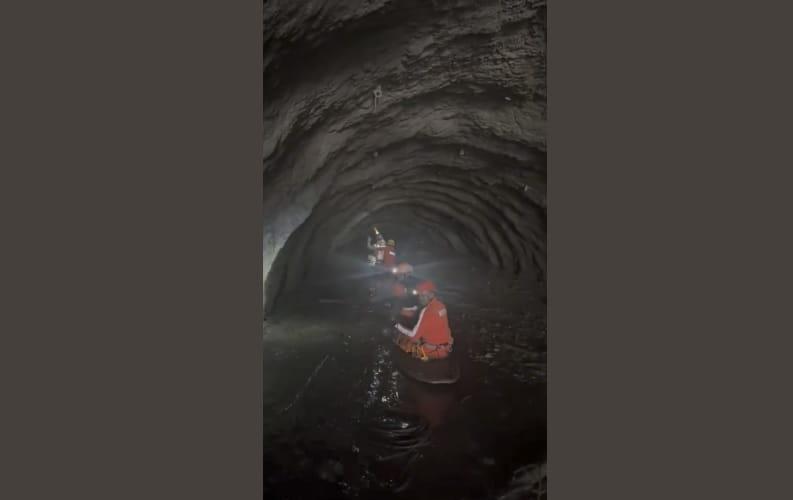
Photo: IANS
Indian and Nepalese rescue teams have intensified operations inside the Chilime hydropower project tunnel in Nepal's Rasuwa district, working to drain water, clear debris and create access for heavy equipment as the search continues for people who may still be trapped following the devastating flash floods.
Indian tunnel rescue teams on Friday moved deeper into the Chilime tunnel and began constructing a temporary track to facilitate the movement of heavy machinery towards the affected sections.
The Chilime hydropower project, located near Syabrubesi village, was among the areas severely affected by flash floods that struck Nepal on August 26.
Rescuers have established access inside the tunnel and are now working towards the waterlogged and blocked portions. Safety ropes have been installed, while improvised floats and pumps are being used to navigate sections where water and debris continue to hamper movement.
The immediate focus is on making the affected sections safer and creating an access route through which additional equipment can be deployed, officials said.
Indian medical teams comprising doctors and paramedics are also assisting affected communities, providing emergency medical treatment and humanitarian support to people displaced by the floods.
Indian Ambassador to Nepal Naveen Srivastava said on Saturday that the Indian tunnel rescue team, working alongside the Nepali Army, had dug deeper into the Chilime tunnel and drained water from the affected sections.
"A temporary track is also being made to allow more heavy equipment to reach tunnel; and doctors with the team held a health camp for the local community," Srivastava said in a post on X.
The Indian rescue teams are coordinating closely with Nepalese authorities as search and recovery operations continue at sites affected by the flash floods.
India has so far supplied tonnes of relief material to Nepal and rescued 166 Indian nationals following the disaster. The assistance includes antibiotics, analgesics, surgical supplies, tarpaulins, sleeping bags, blankets and water purification tablets.
Specialised Indian tunnel rescue teams have also been deployed at the Chilime and Langtang hydropower project sites to clear debris and search for workers who may have been trapped.
A 19-member Indian DNA and forensic analysis team is also in Nepal to assist local authorities in identifying victims as search and recovery operations continue.
The coordinated rescue and relief efforts come as authorities in Nepal continue to assess the damage caused by the flash floods and work to restore access to badly affected areas.



© Copyright
Reporter Post.All Rights Reserved |
Powered by: Aptilogic Software |
 |
Page rendered in 0.0114 seconds.
|
Page rendered in 0.0114 seconds.