Sun, June 28, 2026







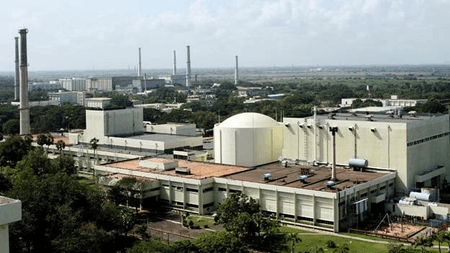
*Representational image
Bengaluru: India is working on a new technology that could allow future lunar landers to remain operational on the Moon for up to 200 days, a major leap from the 14-day lifespan achieved by the Chandrayaan-3 mission, ISRO Chairman V. Narayanan said.
Speaking in Bengaluru on Saturday, Narayanan said the Indian Space Research Organisation (ISRO), in collaboration with the Department of Atomic Energy (DAE), is developing advanced artificial heating systems to help spacecraft survive the Moon’s harsh and extended nights.

One of the biggest challenges in lunar exploration is the drastic drop in temperature after sunset. During the lunar night, which lasts about 14 Earth days, temperatures plunge to extremely low levels, making it difficult for spacecraft electronics to function without a reliable heat source.
India created history on August 23, 2023, when Chandrayaan-3 successfully landed near the Moon’s south pole, becoming the first country to achieve such a feat. However, the Vikram lander remained operational for only one lunar day—around 14 Earth days—as it depended entirely on solar power.
Once sunlight disappeared, the lander could no longer generate electricity, and its onboard systems stopped functioning due to the freezing conditions.
Narayanan said that if the artificial heating technology proves successful, future lunar landers could continue operating for 100 to 200 days, enabling them to survive multiple lunar day-night cycles.

A longer operational life would allow scientists to conduct more experiments, gather significantly larger volumes of scientific data and support long-duration robotic missions on the lunar surface. The technology could also become an important step toward supporting future human missions to the Moon and advancing India's long-term lunar exploration plans.
Narayanan also reiterated that India would need to launch more than 200 satellites over the next three years to meet increasing national and commercial requirements.
He noted that India currently has 56 satellites in orbit, but the growing demand cannot be met by ISRO alone. Stressing the need for greater participation from private companies, start-ups and academic institutions, he said the country's entire space ecosystem must work together to achieve its ambitious goals. He made these remarks during the 10th Industry Connect event organised by IN-SPACe in Ahmedabad.
With inputs from IANS





| 14-09-2018 | ||||||
| Sl No. | Parameters | Actual Data(µg/m3) | Standard Limit(µg/m3) |
|---|---|---|---|
| 1 | PM 10 | 64 | 100 |
| 2 | PM 2.5 | 33 | 60 |
| 3 | SO2 | 55.3 | 80 |
| 4 | NO2 | 58.2 | 80 |
| 14-09-2018 | ||||||
| Station | Temperature(degree centigrade) | Rainfall(mm) | Relative humidity(%) | |||
|---|---|---|---|---|---|---|
| Max | Min | Past 24 hrs. | Since 1st March, 2018 | Max | Min | |
| Ranchi | 31.0 | 22.5 | 000.0 | 1010.1 | 95 | 66 |
| Jamshedpur | 34.1 | 26.2 | 000.0 | 1252.8 | 87 | 58 |
| Bokaro | 33.5 | 24.6 | 015.2 | 824.0 | 92 | 79 |
| Daltonganj | 32.6 | 24.9 | 004.2 | 960.9 | 95 | 67 |
© Copyright
Reporter Post.All Rights Reserved |
Powered by: Aptilogic Software |
 |
Page rendered in 0.0932 seconds.
|
Page rendered in 0.0932 seconds.