Wed, May 20, 2026
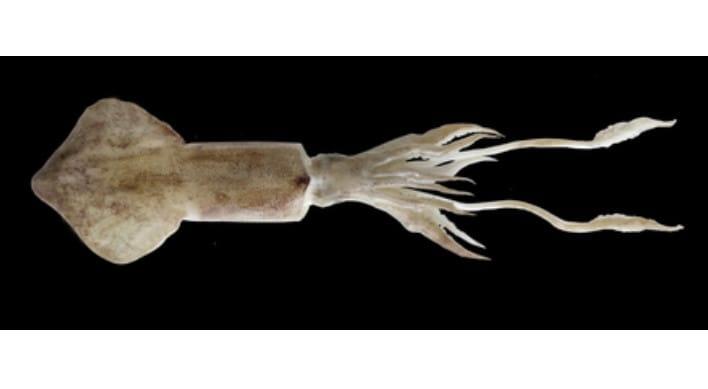
Kochi- A new study conducted by the ICAR-Central Marine Fisheries Research Institute has revealed highly complex mating behaviour in the Indian squid, including evidence of both heterosexual and homosexual mating patterns in the species found in the Arabian Sea.
The research focused on the Indian squid Uroteuthis duvaucelii and was carried out by scientists from the institute’s Shell Fish Fisheries Division. Researchers believe the findings could play an important role in improving fisheries management and marine conservation strategies in India.
The study was led by researchers Dr Geetha Sasikumar and Dr K K Sajikumar, who examined squid samples collected from waters off Kochi. During the analysis of 232 female squids, scientists found that nearly 40 per cent carried spermatangia — sperm-containing structures attached to the buccal membrane, the fleshy area surrounding the mouth.
According to the researchers, the findings suggest that mating activity in Indian squid takes place throughout the year, with peak reproductive activity observed during October.
In a significant discovery, researchers also found spermatangia implanted on the buccal membrane of a male squid, marking the first documented evidence of same-sex sexual behaviour in Indian squid.
Although similar behaviour has previously been observed in some deep-sea squid species outside Indian waters, scientists had generally linked it to low-visibility conditions in deep ocean environments. The latest finding is the first recorded case involving a coastal squid species.
The study, published in the Journal of Natural History, further revealed that Indian squid begin mating at a very early stage of life.
Using statolith analysis — a method similar to studying growth rings in fish — researchers estimated that mating could begin as early as 98 days after hatching.
Another major finding was the unusually high number of sperm packets attached to individual female squids. In one case, scientists counted as many as 385 spermatangia around the mouth region of a single female squid, indicating repeated mating with multiple males before egg-laying.
Researchers believe this behaviour may be linked to dense spawning groups where mating becomes highly competitive and opportunistic. Scientists say this could contribute to the squid’s rapid growth and strong reproductive success.
The researchers stressed that understanding the squid’s reproductive system is important for better stock assessment and sustainable fisheries management, especially as squid resources are becoming increasingly valuable to India’s marine economy.
They also called for more behavioural and physiological studies to gain deeper insight into the species’ reproductive dynamics and ecological adaptations.
With inputs from IANS




| 14-09-2018 | ||||||
| Sl No. | Parameters | Actual Data(µg/m3) | Standard Limit(µg/m3) |
|---|---|---|---|
| 1 | PM 10 | 64 | 100 |
| 2 | PM 2.5 | 33 | 60 |
| 3 | SO2 | 55.3 | 80 |
| 4 | NO2 | 58.2 | 80 |
| 14-09-2018 | ||||||
| Station | Temperature(degree centigrade) | Rainfall(mm) | Relative humidity(%) | |||
|---|---|---|---|---|---|---|
| Max | Min | Past 24 hrs. | Since 1st March, 2018 | Max | Min | |
| Ranchi | 31.0 | 22.5 | 000.0 | 1010.1 | 95 | 66 |
| Jamshedpur | 34.1 | 26.2 | 000.0 | 1252.8 | 87 | 58 |
| Bokaro | 33.5 | 24.6 | 015.2 | 824.0 | 92 | 79 |
| Daltonganj | 32.6 | 24.9 | 004.2 | 960.9 | 95 | 67 |
© Copyright
Reporter Post.All Rights Reserved |
Powered by: Aptilogic Software |
 |
Page rendered in 0.0978 seconds.
|
Page rendered in 0.0978 seconds.