Sun, May 17, 2026

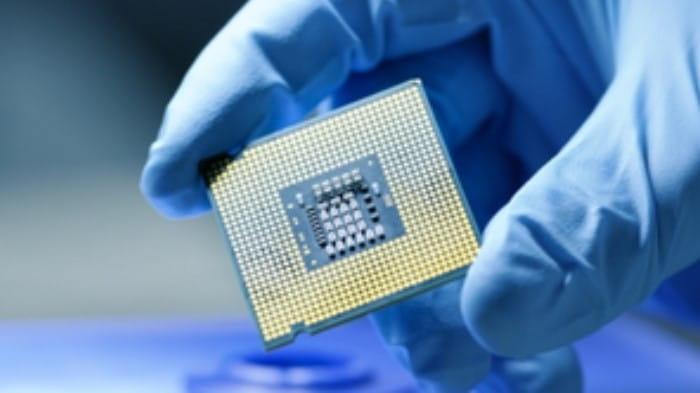
New Delhi: India and the Netherlands have announced an ambitious plan to expand cooperation in cutting-edge technologies, scientific research and higher education, with semiconductors taking center stage in the growing strategic partnership between the two countries.
The collaboration aims to build stronger and more resilient semiconductor supply chains by increasing coordination between industries, research bodies and government agencies in both nations. As part of the agreement, India and the Netherlands will also work together in emerging fields such as artificial intelligence (AI), photonics, quantum technologies and cybersecurity.
A key highlight of the partnership is the focus on developing talent and strengthening the semiconductor ecosystem. The Dutch Semicon Competence Centre will collaborate with the India Semiconductor Mission to support startups, small and medium enterprises, suppliers and technology innovators through skill development, knowledge sharing and joint innovation initiatives.
In a major academic initiative, Eindhoven University of Technology and the University of Twente have partnered with six leading Indian institutes — the Indian Institute of Science (IISc), IIT Bombay, IIT Delhi, IIT Gandhinagar, IIT Guwahati and IIT Madras — to create a “brain bridge” for semiconductor and advanced technology research.
The initiative has received backing from major industry players including NXP Semiconductors, ASML, Tata Electronics and CG Semi.
Both countries also agreed to deepen collaboration in scientific research and innovation by aligning priorities in areas such as energy materials, biomolecular and cell technologies, AI and cybersecurity through the Joint Working Group on Science, Technology and Innovation.
Apart from technology, India and the Netherlands reaffirmed their commitment to expanding cooperation in higher education. The two sides plan to promote regular institutional engagement, strengthen STEM-based academic exchanges and encourage new partnerships between universities and research institutions.
The partnership will also extend to the space sector, where both nations aim to use space-based technologies and applications to address global challenges like climate change, water management, food security and air pollution.
With inputs from IANS




| 14-09-2018 | ||||||
| Sl No. | Parameters | Actual Data(µg/m3) | Standard Limit(µg/m3) |
|---|---|---|---|
| 1 | PM 10 | 64 | 100 |
| 2 | PM 2.5 | 33 | 60 |
| 3 | SO2 | 55.3 | 80 |
| 4 | NO2 | 58.2 | 80 |
| 14-09-2018 | ||||||
| Station | Temperature(degree centigrade) | Rainfall(mm) | Relative humidity(%) | |||
|---|---|---|---|---|---|---|
| Max | Min | Past 24 hrs. | Since 1st March, 2018 | Max | Min | |
| Ranchi | 31.0 | 22.5 | 000.0 | 1010.1 | 95 | 66 |
| Jamshedpur | 34.1 | 26.2 | 000.0 | 1252.8 | 87 | 58 |
| Bokaro | 33.5 | 24.6 | 015.2 | 824.0 | 92 | 79 |
| Daltonganj | 32.6 | 24.9 | 004.2 | 960.9 | 95 | 67 |
© Copyright
Reporter Post.All Rights Reserved |
Powered by: Aptilogic Software |
 |
Page rendered in 0.1196 seconds.
|
Page rendered in 0.1196 seconds.