
Wed, May 13, 2026

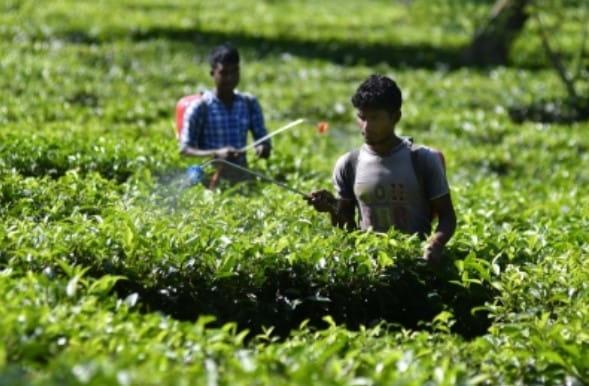
Hyderabad: Scientists at CSIR-Centre for Cellular and Molecular Biology have uncovered an important antiviral defence mechanism used by plants to fight infections. The findings, published in the Journal of the American Chemical Society, explain how plants use sticky, liquid-like protein droplets to trap and disable invading viruses.
The study was led by researcher Mandar V. Deshmukh and sheds light on the molecular process behind this natural defence system.
According to the researchers, many viruses carry double-stranded RNA as their genetic material. When plants are infected, they produce special RNA-binding proteins that can identify and attach themselves to the virus’s genetic machinery at specific sites known as Viral Replication Complexes. This process blocks the virus from copying its genetic material, effectively stopping it from multiplying inside plant cells.
Until now, scientists believed these proteins worked through a simple “lock-and-key” mechanism. However, using advanced tools such as Nuclear Magnetic Resonance (NMR) spectroscopy, fluorescence microscopy, and molecular dynamics simulations, the CCMB team discovered a much more complex process.
The researchers found that these RNA-binding proteins possess a unique structure with positively and negatively charged regions spread across their surfaces. These electrical charges help proteins attract one another and form interconnected, gel-like droplets.
Explaining the discovery, lead author Jaydeep Paul said the proteins work like “molecular glue,” creating dense droplets that trap viral RNA and prevent it from interacting with the machinery required for replication.
Scientists refer to these droplets as biomolecular condensates. According to Dr Deshmukh, the finding changes the traditional understanding of cells, showing them not as static structures but as highly dynamic environments where membraneless compartments can form and function like oil droplets in water.
Researchers believe the breakthrough could have major implications for agriculture by helping develop crop varieties with stronger natural immunity against viral infections that cause massive crop losses worldwide.
The study may also have medical applications for humans. Scientists say understanding these sticky protein structures could help develop treatments to dissolve harmful protein clumps linked to dementia or break down protective barriers around tumours. The research could eventually aid in designing drugs that precisely control these molecular interactions.
With inputs from IANS




| 14-09-2018 | ||||||
| Sl No. | Parameters | Actual Data(µg/m3) | Standard Limit(µg/m3) |
|---|---|---|---|
| 1 | PM 10 | 64 | 100 |
| 2 | PM 2.5 | 33 | 60 |
| 3 | SO2 | 55.3 | 80 |
| 4 | NO2 | 58.2 | 80 |
| 14-09-2018 | ||||||
| Station | Temperature(degree centigrade) | Rainfall(mm) | Relative humidity(%) | |||
|---|---|---|---|---|---|---|
| Max | Min | Past 24 hrs. | Since 1st March, 2018 | Max | Min | |
| Ranchi | 31.0 | 22.5 | 000.0 | 1010.1 | 95 | 66 |
| Jamshedpur | 34.1 | 26.2 | 000.0 | 1252.8 | 87 | 58 |
| Bokaro | 33.5 | 24.6 | 015.2 | 824.0 | 92 | 79 |
| Daltonganj | 32.6 | 24.9 | 004.2 | 960.9 | 95 | 67 |
© Copyright
Reporter Post.All Rights Reserved |
Powered by: Aptilogic Software |
 |
Page rendered in 0.0882 seconds.
|
Page rendered in 0.0882 seconds.