Wed, October 14, 2026

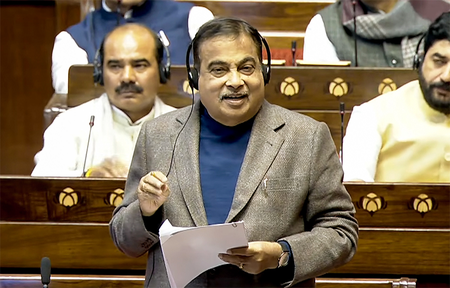
New Delhi : The nationwide rollout of the multi-lane free flow (MLFF) tolling system along with AI-powered highway management is expected to be completed by the end of 2026, a move that will virtually eliminate waiting time at toll plazas, Parliament was informed on Wednesday.
Replying to a question in the Rajya Sabha, Union Minister for Road Transport and Highways Nitin Gadkari said the new system aims to bring waiting time at toll booths down to zero, significantly improving travel efficiency for commuters.
Under the MLFF system, vehicles will be able to pass through toll points at speeds of up to 80 km per hour without stopping. The technology will rely on a combination of artificial intelligence-based number plate recognition, satellite tracking and FASTag integration to automatically identify vehicles and collect toll charges.
The minister assured the House that the MLFF system will be fully implemented across national highways by 2026. Once operational, it will help curb toll revenue leakage, ensure smoother traffic flow and reduce overall travel time.
Responding to supplementary questions, Gadkari said the AI-driven system would also result in fuel savings for commuters while boosting government revenue. He noted that earlier, vehicles had to wait between three and ten minutes at toll plazas, a delay that was reduced to under a minute with FASTag implementation.
“With FASTag, our income increased by at least Rs 5,000 crore. After MLFF replaces FASTag, vehicles will be able to cross toll points at speeds of up to 80 km per hour, with no stoppage at all,” the minister said, highlighting the efficiency gains of the new tolling framework.
With inputs from IANS



© Copyright
Reporter Post.All Rights Reserved |
Powered by: Aptilogic Software |
 |
Page rendered in 0.0111 seconds.
|
Page rendered in 0.0111 seconds.