Sat, August 22, 2026

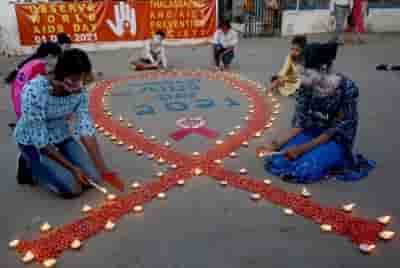
New Delhi – India has the capacity to manufacture affordable, high-quality HIV diagnostics and medications, and to supply them globally, said Dr. Ishwar Gilada, Secretary General of People’s Health Organisation (India), on Friday. His remarks come amid a warning from UNAIDS about a "historic funding crisis" that could endanger millions of lives affected by HIV.
Dr. Gilada, the only Indian member on the Governing Council of the International AIDS Society (IAS), affirmed India’s ability to produce generic versions of advanced HIV treatments such as lenacapavir—a long-acting injectable that provides near-complete protection against HIV with just two doses a year.
“India has a time-tested and proven capacity to manufacture HIV diagnostics and medicines, along with robust mechanisms to deliver them globally and sustainably,” said Gilada, who is also President Emeritus of the AIDS Society of India.
His statement follows a UNAIDS report warning that discontinuing support from the US President’s Emergency Plan for AIDS Relief (PEPFAR) could lead to over 4 million additional AIDS-related deaths and 6 million new HIV infections by 2029.
The US, historically the largest contributor to global HIV initiatives, ceased its funding support on January 20 following the inauguration of President Donald Trump.
Labeling it a “historic funding crisis,” the UNAIDS report emphasized that this setback could reverse decades of progress in the fight against HIV. Since 2010, community and government-led efforts have cut new HIV infections by 40% and AIDS-related deaths by 56%.
“While the Global North may have provided financial aid or loans, it is Indian-made medicines that have truly transformed the global AIDS response,” said Gilada.
He pointed out that Indian-produced antiretroviral therapy (ART) medicines have been crucial in sustaining the health of over 90% of people living with HIV worldwide. Despite this, he said, India has received little recognition from international bodies like the UN.
According to the National AIDS Control Organisation (NACO), 94% of India’s HIV programme is funded by the government, with just 6% supported by the Global Fund.
“The future of HIV response must be nationally owned, sustainable, inclusive, and multisectoral,” Gilada stressed. He cited the UNAIDS report, which showed that 25 out of 60 low- and middle-income countries (LMICs) have successfully increased domestic HIV funding through 2026.
He urged LMIC governments to prioritize innovative domestic health financing, including models such as social enterprises.
India reported 2.54 million people living with HIV in 2023, including 70,000 children—a slight increase from 2.5 million in 2022 and 2.4 million in 2021. The year also saw 68,450 new infections, averaging 187 new cases daily. AIDS-related deaths reached 35,870 in 2023, with four lives lost every hour—a year-on-year increase of 11%.
“Our HIV programmes must ensure that prevention, diagnostics, treatment, care, and support services reach everyone in need—globally,” Gilada asserted.
“We cannot hope to end AIDS if HIV prevention is neglected. With a range of scientifically proven HIV prevention strategies available, it is crucial to implement them effectively to significantly reduce new infections,” he concluded.
With inputs from IANS



© Copyright
Reporter Post.All Rights Reserved |
Powered by: Aptilogic Software |
 |
Page rendered in 0.0876 seconds.
|
Page rendered in 0.0876 seconds.