Mon, October 12, 2026
Representational Pic
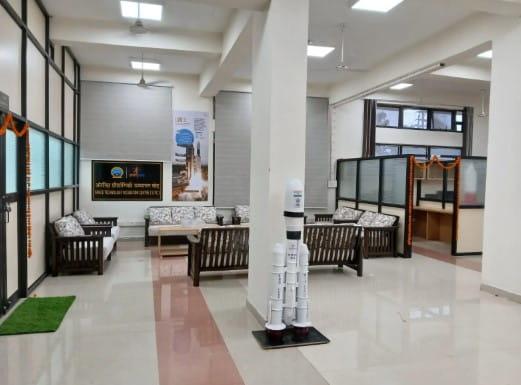
The Indian Space Research Organisation (ISRO) on Tuesday opened a Space Technology Incubation Centre at the National Institute of Technology (NIT) in Agartala, Tripura, as part of an initiative to encourage start-ups and industry-led innovation in the country's growing space sector.
The centre was inaugurated remotely from Bengaluru, while Tripura Chief Minister Biplab Kumar Deb formally opened the facility in Agartala.
ISRO Chairman K. Sivan said the incubation centre would support start-ups in developing applications, products and components that could eventually be used in future space missions. The initiative is also intended to bring more private companies and academic institutions into India's space technology ecosystem.
Sivan was speaking at the first edition of the 'Spacetronics 2018' summit in Bengaluru, organised by the India Electronics and Semiconductor Association (IESA) to discuss opportunities for the electronics design and manufacturing industry in the space sector.
ISRO plans to establish five more such incubation centres within the next six months at Jalandhar in Punjab, Bhubaneswar in Odisha, Nagpur in Maharashtra, Indore in Madhya Pradesh and Tiruchirapalli in Tamil Nadu.
Sivan said the locations were selected because they have strong academic institutions and industrial capabilities but relatively limited existing space-sector activity. The aim is to use these regional strengths to promote research, innovation and the development of indigenous space technologies.
Each incubation centre will be established at an estimated cost of Rs 2 crore. Start-ups working with industry partners will be able to develop prototypes of components required for space applications, while ISRO will provide technical mentorship and guidance.
The agency has also offered a potential pathway for successful technologies to enter its supply chain. If prototypes developed by start-ups meet the required technical standards, ISRO may acquire the technologies and components for use in future missions.
The initiative could also provide a boost to Tripura's technology and manufacturing ambitions by creating opportunities for local entrepreneurs, researchers and engineering graduates to work on high-technology projects.
Alongside the incubation centres, ISRO is planning regional academic centres for space research at state-run universities in Jaipur, Patna, Kanyakumari, Varanasi, Kurukshetra and Guwahati.
While the incubation centres will focus primarily on industry, manufacturing and product development, the academic centres are expected to concentrate on fundamental and applied space research. According to Sivan, the broader network is aimed at tapping talent from different parts of the country rather than concentrating space-related research and manufacturing in a few established centres.
The push comes at a time when India's electronics and space sectors are expected to see strong growth. IESA Chairman Anilkumar Muniswamy said electronics consumption across sectors, including space, could reach $800 billion by 2026, while India's domestic production capacity was estimated at only around $120 billion.
With India still importing more than 75 per cent of its electronics requirements, he said there was considerable scope for domestic companies to expand into the space and high-technology manufacturing market.
Muniswamy also noted that limited launch activity had previously made it difficult for Indian companies to achieve the scale required to manufacture space components competitively. With ISRO targeting a much higher launch frequency, including plans for as many as two missions a month, the private sector could gain significantly more opportunities to participate in the country's space programme.
The new incubation network therefore represents an important step towards building a wider domestic space industry, with ISRO seeking to connect start-ups, manufacturers, universities and researchers across different regions of India.



© Copyright
Reporter Post.All Rights Reserved |
Powered by: Aptilogic Software |
 |
Page rendered in 0.0122 seconds.
|
Page rendered in 0.0122 seconds.