Thu, November 19, 2026
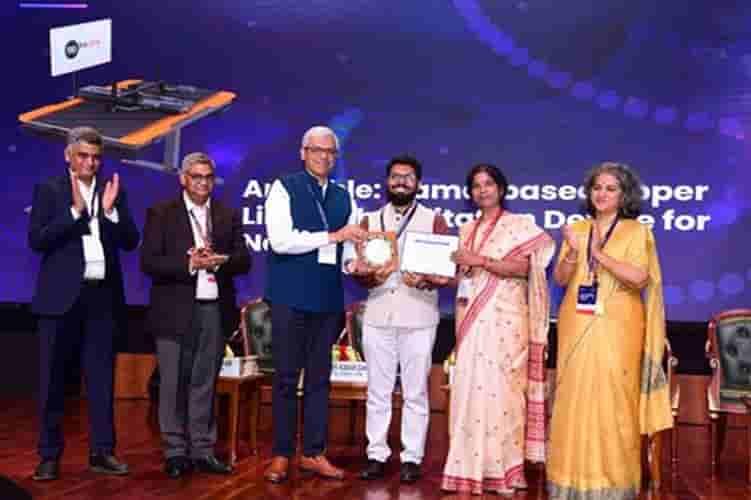
Photo: IANS
New Delhi: The Indian Council of Medical Research (ICMR) has achieved a significant milestone by completing 100 successful technology transfer deals in less than two years, accelerating the commercialisation of indigenous medical research and healthcare innovations.
The achievement was announced at the third Department of Health Research (DHR)-ICMR Health Research Excellence Summit in New Delhi, which also marked 115 years of ICMR's contribution to biomedical and health research in India.
During the two-day summit, ICMR exchanged 20 licensing agreements covering eight technologies with nine Indian companies. The agreements took the cumulative number of successful technology transfers under the Medical Innovations Patent Mitra initiative to 100.
The event brought together more than 600 scientists, researchers, innovators, administrators and policymakers from ICMR institutes, partner organisations, government bodies and academic institutions. It provided a platform to showcase research achievements and strengthen collaboration among the scientific community, industry and policymakers.
An Innovation Exhibition featured 17 technologies developed by ICMR institutes and their extramural partner institutions. Additionally, 10 technologies and eight patents were presented during a dedicated session highlighting research innovations and intellectual property.
Several new initiatives and research resources were also unveiled during the summit. The Syndromic Surveillance initiative under the DHR's Virus Research and Diagnostic Laboratories (VRDL) Scheme will establish an early-warning network for disease outbreaks across 70 VRLs and Infectious Disease Research and Diagnostic Laboratories (IRDLs).
The Dr M.K. Bhan Young Medical Faculty PhD Portal was launched as a centralised digital platform to provide information to prospective applicants.
ICMR also released its Antimicrobial Resistance (AMR) Annual Report and Standard Operating Procedures, bringing together national evidence on antimicrobial resistance and standardising laboratory practices. Another key release was the ICMR Compendium, which documents 25 stories highlighting how scientific research has been translated into tangible benefits for people.
The summit also recognised the top 100 school students selected through the SHINE National Competition for their contributions and scientific thinking in public health.
SHINE (Science and Health Innovation for the NextGen Explorers) is an ICMR initiative aimed at encouraging scientific curiosity and innovation among students in Grades 9 to 12 from government, government-aided and private schools across the country.


© Copyright
Reporter Post.All Rights Reserved |
Powered by: Aptilogic Software |
 |
Page rendered in 0.0095 seconds.