Wed, September 02, 2026

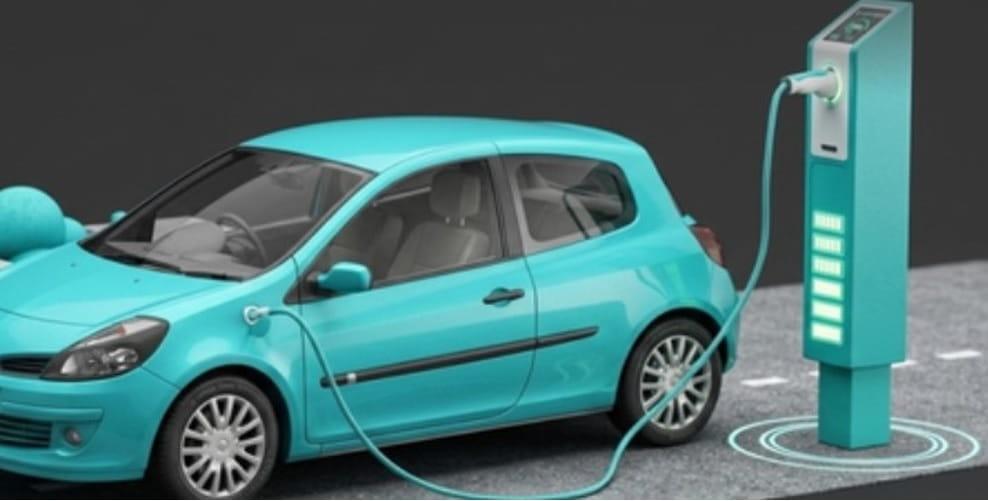
Photo: IANS
India’s electric-vehicle ambitions are running into a major infrastructure challenge: the country could need as many as 1.32 million EV charging points by 2030, compared with just 67,657 chargers installed as of August 2026.
The figures, cited in a new report by Rubix Data Sciences based on estimates from the Confederation of Indian Industry (CII), underline the enormous scale of the charging infrastructure expansion that lies ahead.
India has made considerable progress in recent years. The number of public EV charging stations has increased nearly six-fold since 2022, rising from around 5,000 to 29,151 by December 2025, according to data from the Ministry of Heavy Industries.
Yet the expansion remains heavily concentrated geographically. Karnataka, Maharashtra and Uttar Pradesh are among the leading states in charger deployment, while the top 10 states together account for about 78 per cent of the country’s charging network.
That concentration could become a significant issue as EV adoption spreads beyond the major markets.
The bigger concern, however, is not simply the number of chargers but whether they can operate as commercially viable businesses.
The report estimates that utilisation of public chargers remains extremely low, generally in the range of just 1–5 per cent. For charge point operators (CPOs), this creates a difficult business equation: expensive infrastructure has to be installed and maintained even when the number of paying users remains limited.
Operators are therefore experimenting with several revenue models, including subscriptions, fleet contracts, charging-network roaming and revenue-sharing arrangements with property owners.
India’s charging network also remains dominated by relatively low-powered equipment. Nearly 73 per cent of chargers are rated below 30 kW, reflecting the country's large and rapidly electrifying two- and three-wheeler segments, whose charging requirements are generally lower than those of passenger cars.
As of August 7, 2026, India had 67,657 EV chargers, including 1,139 associated with battery swapping stations.
Excluding battery-swapping infrastructure, 48,709 chargers — roughly 73 per cent of the 66,518 chargers — were rated below 30 kW. Another 15,753 chargers fell in the 30–60 kW category, while only 1,513 were rated between 61 and 120 kW.
The availability of genuinely high-power charging is even more limited. Only 534 chargers were rated between 121 and 240 kW, while just nine chargers had a capacity exceeding 240 kW.
This imbalance highlights a potential bottleneck for India’s next phase of EV adoption. The country has already achieved relatively strong electrification among three-wheelers, where EV penetration is estimated at 60.77 per cent. Two-wheelers have reached about 8.88 per cent, while four-wheelers remain at approximately 5.70 per cent.
As passenger EV ownership grows, demand is likely to shift increasingly towards faster charging, particularly along highways, major urban corridors and high-traffic intercity routes.
The report therefore sees significant headroom for CPOs to expand higher-power charging infrastructure as the passenger EV market matures.
But the road to 1.32 million charging points will require more than simply installing hardware. The industry will have to solve the economics of low utilisation, secure suitable locations, expand grid capacity and create business models capable of supporting infrastructure before charging demand reaches full scale.
For India, the EV transition is consequently becoming a race between vehicle adoption and the infrastructure needed to support it. The country may have made rapid progress since 2022, but the gap between today’s charging network and the projected requirement for 2030 remains enormous.



© Copyright
Reporter Post.All Rights Reserved |
Powered by: Aptilogic Software |
 |
Page rendered in 0.1156 seconds.
|
Page rendered in 0.1156 seconds.