
Sat, October 03, 2026

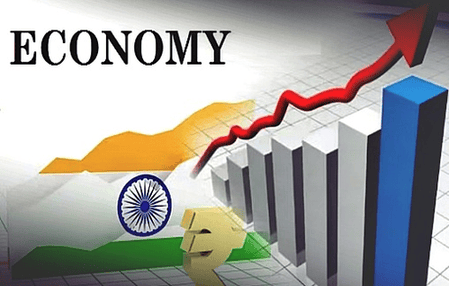
New Delhi- India’s economy is expected to register growth between 6.8 per cent and 7.2 per cent in the financial year 2026–27, driven by ongoing economic reforms and a series of bilateral trade agreements with major global economies, according to the latest EY Economy Watch report.
The report noted that India’s medium-term outlook has improved despite global uncertainties triggered by tariff-related disruptions in the US. EY India’s Chief Policy Advisor D.K. Srivastava said that India’s expanding network of trade agreements is strengthening growth prospects over the coming years.
According to the analysis, achieving the government’s long-term Viksit Bharat 2047 vision will require a steady increase in the tax-to-GDP ratio. This, EY suggested, should primarily come from better tax compliance rather than major new structural reforms, as most significant tax changes have already been implemented.
The report highlighted that in the current fiscal year, the government introduced substantial tax reforms, especially in personal income tax and the Goods and Services Tax (GST) framework. These measures involved deliberate revenue sacrifices aimed at boosting household disposable income and supporting private consumption.
While these reforms are likely to result in the Centre’s gross tax revenues falling short of FY26 budget estimates, EY expects the government to still meet its targeted fiscal deficit for the year.
Meanwhile, Finance Minister Nirmala Sitharaman has outlined a further consolidation of public finances, projecting the fiscal deficit to decline to 4.3 per cent of GDP in 2026–27, down from 4.4 per cent in 2025–26. Speaking during her Budget address on February 1, she said the approach balances economic growth with fiscal stability.
To finance the fiscal deficit in FY27, the government plans net market borrowing of Rs 11.7 lakh crore through dated securities, while gross market borrowing is estimated at Rs 17.2 lakh crore, the report added.
With inputs from IANS



© Copyright
Reporter Post.All Rights Reserved |
Powered by: Aptilogic Software |
 |
Page rendered in 0.0095 seconds.
|
Page rendered in 0.0095 seconds.