
Sat, June 13, 2026
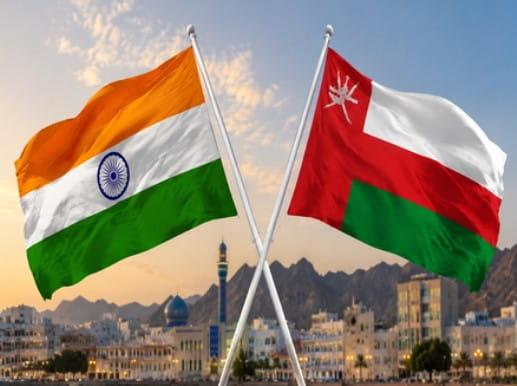
New Delhi: The recently implemented India-Oman Comprehensive Economic Partnership Agreement (CEPA) is expected to provide a major boost to India's textile, apparel, and handicrafts sectors by granting unprecedented market access in the Gulf nation.
Under the agreement, Oman has offered immediate duty-free access on all 945 textile and apparel tariff lines, removing the existing 5 per cent Most Favoured Nation (MFN) duty. The move is expected to significantly improve the competitiveness of Indian products in the Omani market. Exports of handicraft products have also been granted zero-duty access from the outset.
According to the Ministry of Textiles, India exported textiles, apparel, and handicrafts worth USD 95.1 million to Oman in FY 2025-26, while Oman imports nearly USD 598 million worth of textile and apparel products annually. With India currently supplying around 11 per cent of Oman's textile imports and ranking as its third-largest source, the agreement presents substantial opportunities for Indian exporters to expand their presence.
The CEPA is expected to drive growth across key product categories, including garments, home textiles, carpets, fabrics, and other value-added textile products. Indian manufacturers and exporters are particularly well-positioned to benefit from rising demand for quality and design-oriented products in the Omani market.
A key feature of the agreement is its fully digital Certificate of Origin (CoO) system, which enables electronic exchange of trade documents between the two countries. This is expected to reduce paperwork, lower transaction costs, improve efficiency, and facilitate smoother cross-border trade.
The pact also strengthens cooperation on intellectual property rights and provides for the recognition of Geographical Indications (GIs). This could help increase the visibility and market appeal of India's GI-tagged handloom and handicraft products, further enhancing the global reputation of "Brand India."
The government believes the agreement will not only increase bilateral trade but also create fresh opportunities for Indian exporters, artisans, and MSMEs by providing a transparent and predictable trading framework.
Beyond trade benefits, Oman is increasingly emerging as a strategic gateway to the Gulf region. With ports such as Port of Sohar offering alternative trade routes, the agreement is expected to strengthen India's connectivity with the countries of the Gulf Cooperation Council as well as markets in East Africa.
The India-Oman CEPA is therefore being viewed as a significant step toward expanding India's export footprint, strengthening regional supply chains, and reinforcing the country's position as a reliable global supplier of textiles and handicrafts.
With inputs from IANS




| 14-09-2018 | ||||||
| Sl No. | Parameters | Actual Data(µg/m3) | Standard Limit(µg/m3) |
|---|---|---|---|
| 1 | PM 10 | 64 | 100 |
| 2 | PM 2.5 | 33 | 60 |
| 3 | SO2 | 55.3 | 80 |
| 4 | NO2 | 58.2 | 80 |
| 14-09-2018 | ||||||
| Station | Temperature(degree centigrade) | Rainfall(mm) | Relative humidity(%) | |||
|---|---|---|---|---|---|---|
| Max | Min | Past 24 hrs. | Since 1st March, 2018 | Max | Min | |
| Ranchi | 31.0 | 22.5 | 000.0 | 1010.1 | 95 | 66 |
| Jamshedpur | 34.1 | 26.2 | 000.0 | 1252.8 | 87 | 58 |
| Bokaro | 33.5 | 24.6 | 015.2 | 824.0 | 92 | 79 |
| Daltonganj | 32.6 | 24.9 | 004.2 | 960.9 | 95 | 67 |
© Copyright
Reporter Post.All Rights Reserved |
Powered by: Aptilogic Software |
 |
Page rendered in 0.0772 seconds.
|
Page rendered in 0.0772 seconds.