Wed, June 03, 2026

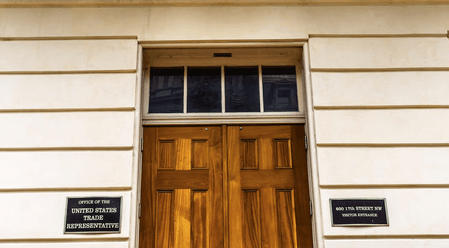
Washington: The United States has proposed imposing additional import tariffs of up to 12.5 per cent on India and 59 other economies, citing concerns over inadequate measures to prevent goods produced through forced labour from entering their markets.
The proposal has been put forward by the **United States Trade Representative (USTR)** under Section 301 of the Trade Act of 1974. According to the USTR, the targeted economies have not effectively enforced restrictions on imports linked to forced labour, a situation it believes unfairly impacts American businesses and workers.
In its statement, the USTR said that the failure of these economies to prohibit and enforce bans on goods produced with forced labour places an unnecessary burden on US commerce, making the issue actionable under US trade law.
US Trade Representative **Jamieson Greer** said it is unacceptable for key trading partners to fall short in tackling the import of goods linked to forced labour.
He argued that such practices create an uneven global marketplace, forcing American workers and industries to compete against products produced under unfair labour conditions.
Greer acknowledged that some countries have taken preliminary steps to curb the entry of forced-labour goods through trade agreements and other commitments. However, he stressed that stronger action is needed to ensure international trade does not encourage or sustain exploitative labour practices.
Under the proposal, countries that already enforce a ban on forced-labour imports, have pledged to do so through reciprocal trade agreements, or maintain partial safeguards against such products would face an additional tariff of 10 per cent.
All other economies, including those considered to have insufficient measures in place, could be subjected to a higher additional duty of 12.5 per cent.
The USTR has also suggested a special mechanism for the textile and apparel sector that would allow a limited quantity of imports from certain countries to enter the US market at a reduced Section 301 tariff rate.
Public hearings on the proposed measures are scheduled to begin on July 7, 2026.
With inputs from IANS




| 14-09-2018 | ||||||
| Sl No. | Parameters | Actual Data(µg/m3) | Standard Limit(µg/m3) |
|---|---|---|---|
| 1 | PM 10 | 64 | 100 |
| 2 | PM 2.5 | 33 | 60 |
| 3 | SO2 | 55.3 | 80 |
| 4 | NO2 | 58.2 | 80 |
| 14-09-2018 | ||||||
| Station | Temperature(degree centigrade) | Rainfall(mm) | Relative humidity(%) | |||
|---|---|---|---|---|---|---|
| Max | Min | Past 24 hrs. | Since 1st March, 2018 | Max | Min | |
| Ranchi | 31.0 | 22.5 | 000.0 | 1010.1 | 95 | 66 |
| Jamshedpur | 34.1 | 26.2 | 000.0 | 1252.8 | 87 | 58 |
| Bokaro | 33.5 | 24.6 | 015.2 | 824.0 | 92 | 79 |
| Daltonganj | 32.6 | 24.9 | 004.2 | 960.9 | 95 | 67 |
© Copyright
Reporter Post.All Rights Reserved |
Powered by: Aptilogic Software |
 |
Page rendered in 0.1183 seconds.
|
Page rendered in 0.1183 seconds.