Tue, September 22, 2026

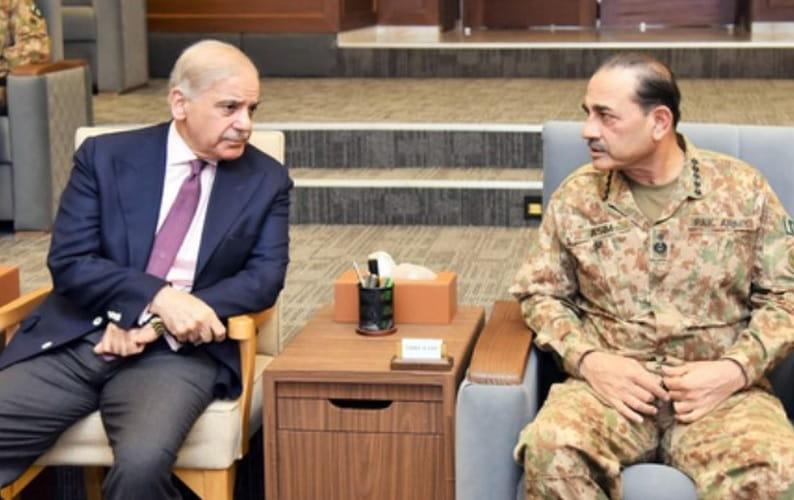
Photo: IANS
Pakistan’s debate over creating new provinces has entered a new phase, with Army chief and Chief of Defence Forces Field Marshal Asim Munir backing the idea of restructuring the country’s administrative map, according to a report.
The proposal has triggered fresh political debate over how Pakistan’s four existing provinces should be reorganised, with suggestions ranging from new provinces to smaller administrative units and stronger local governments.
A report in Parrhesia News said Munir raised the issue while addressing business leaders in Karachi. Interior Minister Mohsin Naqvi subsequently called on political parties to reach a consensus on the creation of new administrative units, while leaders of the Muttahida Qaumi Movement-Pakistan (MQM-P) have also expressed support for the proposal.
The idea, however, is not confined to the military establishment. Pakistan’s Planning Minister Ahsan Iqbal recently proposed creating as many as 15 provinces or alternatively empowering 160 district governments, arguing that the existing governance structure needed major reform.
Rana Sanaullah, adviser to Prime Minister Shehbaz Sharif on political affairs, has said that any decision on creating new provinces must ultimately be taken by Parliament. He also argued that such a major constitutional issue should be debated in the appropriate parliamentary forum rather than being settled through speeches or business seminars.
The issue has also generated strong reactions in Sindh. The Sindh Assembly recently debated the creation of new provinces and administrative units, with ruling Pakistan Peoples Party members opposing any division of the province while opposition parties called for smaller administrative units and greater devolution.
MQM-P, meanwhile, has renewed its longstanding demand for a separate administrative unit in urban Sindh, arguing that smaller provinces could improve governance and bring decision-making closer to residents.
According to the Parrhesia News analysis, proposals being discussed in Pakistani media could potentially divide the existing four provinces into a much larger number of administrative units. However, no definitive nationwide map or detailed constitutional proposal has emerged so far.
The report argues that the restructuring debate is taking place against the backdrop of major changes to Pakistan’s political and constitutional system in recent years. It links the discussion to the expanded role of the military leadership following changes to the military command structure and constitutional amendments.
Pakistan’s Parliament passed legislation in August that gave statutory effect to the new Chief of Defence Forces structure, following the 27th Constitutional Amendment. The changes have prompted debate over the balance of civilian and military authority in the country.
The Parrhesia report takes a more critical view, arguing that breaking up the existing provinces could alter the distribution of political power between Islamabad and the provinces. It suggests that the consequences would depend heavily on how boundaries, powers, resources and representation are determined.
Supporters of administrative restructuring, however, have framed the proposal primarily in terms of governance. They argue that Pakistan’s large and increasingly populous provinces can make administration and public-service delivery difficult and that smaller units could bring government closer to citizens.
The debate is therefore moving beyond the question of whether Pakistan needs smaller administrative units to the more consequential issues of constitutional procedure, provincial autonomy, resource distribution and the balance of power between the federal and provincial governments.
Any creation of new provinces would require constitutional and parliamentary action, making the eventual shape of the proposal dependent on political consensus and the constitutional process.




© Copyright
Reporter Post.All Rights Reserved |
Powered by: Aptilogic Software |
 |
Page rendered in 0.0134 seconds.
|
Page rendered in 0.0134 seconds.