Sun, September 20, 2026

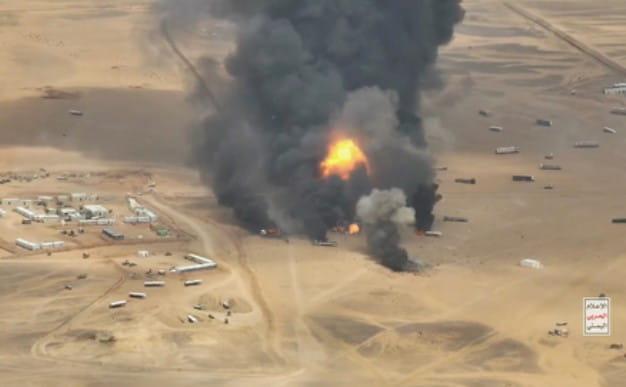
Photo: IANS
Pakistan's defence commitments to Saudi Arabia are facing their first major test as Houthi attacks on the kingdom intensify, raising questions over how far Islamabad may become involved in the widening Middle East conflict, according to a report in The Guardian.
The issue has placed Pakistan's army chief, Field Marshal Asim Munir, in a difficult strategic position as Saudi Arabia confronts the Iran-aligned Houthi movement in Yemen and seeks greater military support from its partners.
Pakistan and Saudi Arabia initially signed a bilateral defence pact in September 2025, under which Islamabad would provide military training and defence support to the kingdom, while Saudi Arabia offered significant financial assistance and investment. Munir was present in Riyadh for the signing.
The regional situation, however, has changed sharply since then. The conflict involving Iran has expanded across the Gulf, while the collapse of the Saudi-Houthi truce has brought renewed fighting in Yemen and increased attacks on Saudi territory.
In August 2026, the bilateral arrangement was expanded into the Makkah Joint Defence Agreement involving Saudi Arabia, Pakistan and Türkiye. The agreement states that an armed attack against any one of the three countries will be regarded as an attack against all three. Saudi Arabia's official statement said the pact is intended to strengthen collective deterrence and defence cooperation.
The timing has become particularly significant as the Houthis have expanded their military activity. The group has made territorial gains in Yemen and launched attacks involving missiles and drones against Saudi targets. Saudi Arabia has responded with airstrikes against Houthi positions. The escalation has also raised concerns about threats to energy infrastructure and shipping routes in the region.
The Guardian report said the developments could create pressure on Pakistan to provide more direct military assistance to Saudi Arabia. Pakistan already has military personnel in the kingdom for training and related purposes.
However, Islamabad has so far stopped short of announcing a troop deployment for combat operations in Yemen.
Pakistan's Foreign Ministry has described the Makkah agreement as an umbrella defence arrangement and said mechanisms still need to be established before its provisions can be considered operational. It also confirmed that some Pakistani forces are already deployed in Saudi Arabia under separate bilateral defence cooperation arrangements.
The distinction could prove important because the pact does not automatically mean that Pakistan would participate in every Saudi military operation. The Guardian has reported that questions remain over whether the collective-defence commitment would apply to Saudi military operations inside Yemen.
For Pakistan, any decision to become directly involved would also carry wider strategic consequences. The country shares a border with Iran and has its own security challenges, including militant violence and instability along its western frontier.
Direct participation in the Yemen conflict could also complicate Islamabad's relationship with Tehran. Pakistan has traditionally sought to maintain working relations with both Saudi Arabia and Iran, despite their competing regional interests.
Pakistan's economic dependence on Saudi Arabia adds another dimension. Riyadh has provided substantial financial support to Islamabad through deposits, loans and investments, making the relationship important for Pakistan's economic stability.
The potential risks have prompted concern among Pakistani political figures. Opposition Senator Raja Nasir Abbas warned that entering another war could prove damaging for a country already dealing with internal security problems and economic pressures.
At the same time, Saudi Arabia is facing an increasingly serious security challenge. Houthi attacks have targeted Saudi cities and infrastructure, while the kingdom has also reported attempts to strike areas near Mecca. Saudi Arabia said its air defences recently intercepted a Houthi drone south of the holy city.
The situation has also prompted Türkiye to signal its readiness to provide military assistance to Saudi Arabia under the new pact. Turkish Foreign Minister Hakan Fidan said Ankara could help meet Saudi military requirements, while Pakistan has so far emphasised its commitment to Saudi security without announcing direct combat involvement.
The immediate question, therefore, is not simply whether the Makkah agreement exists, but how its collective-defence provisions would be interpreted if the Saudi-Houthi conflict continues to escalate.
For Islamabad, the challenge is to balance its security commitment to Riyadh and its economic relationship with Saudi Arabia against the potential consequences of becoming directly involved in a conflict involving Iran-aligned forces.



© Copyright
Reporter Post.All Rights Reserved |
Powered by: Aptilogic Software |
 |
Page rendered in 0.0095 seconds.
|
Page rendered in 0.0095 seconds.