Tue, September 22, 2026


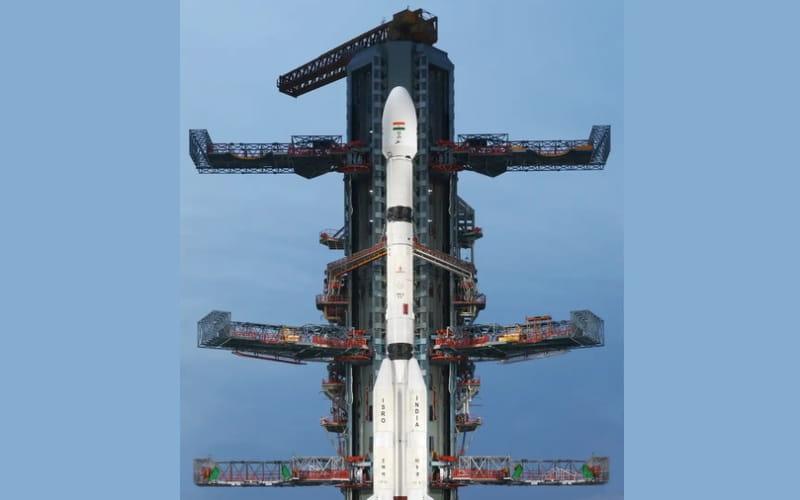
Photo: IANS
India is taking a cautious approach to a US invitation to participate in building a permanent lunar base, with New Delhi weighing the potential gains in technology and experience against the need to retain greater autonomy and influence over the emerging lunar architecture, a Lowy Institute report said.
The Australia-based policy think tank said the US first extended the invitation at an India-US civil space meeting in Bengaluru in early August. The proposal was subsequently highlighted publicly by US Ambassador to India Sergio Gor, who said NASA wanted India to be “by our side” as the US returns to the Moon and establishes a permanent presence there.
According to the report, India has so far neither accepted the invitation nor announced dedicated funding or a specific hardware contribution for a permanent US-led lunar base.
Instead, discussions at the India-US Civil Space Joint Working Group in Bengaluru focused on expanding cooperation in areas including space science, human spaceflight and open scientific-data sharing under the Artemis Accords.
The Lowy Institute report said New Delhi is assessing not only what it could contribute to a future lunar programme but also what it would gain in return, including access to technology, experience and a greater role in determining technical standards, data access, safety practices and the future use and sharing of lunar resources.
A permanent lunar presence, the report noted, would involve much more than individual scientific missions. Countries participating at an early stage could have an opportunity to influence how future lunar infrastructure and activities are organised, while countries contributing resources without a corresponding role in decision-making could risk becoming junior partners in an architecture designed largely by others.
India's approach also fits into its broader strategy of expanding international partnerships while strengthening domestic space capabilities. The report noted that ISRO is expected to focus increasingly on exploration, strategic missions and advanced technologies as Indian private companies take on a larger role in manufacturing and more mature space technologies.
Recent India-US cooperation has already produced major joint initiatives, including the NASA-ISRO Synthetic Aperture Radar (NISAR) mission and India's participation in the Axiom-4 mission, which provided astronaut Shubhanshu Shukla with operational experience aboard the International Space Station. However, the report cautioned that such partnerships do not automatically establish a model for participation in a permanent lunar base.
India is also keeping other international channels open. The report pointed to growing space cooperation with France and Australia, as well as BRICS initiatives involving a remote-sensing satellite constellation and discussions around a proposed BRICS Space Council.
Prime Minister Narendra Modi has also outlined India's own long-term ambitions, including an Indian space station by 2035 and sending an Indian astronaut to the Moon by 2040. During an address at the International Space Summit in Paris this month, he invited France and other countries to become partners in India's next phase of space exploration.
The Lowy Institute analysis said India's position should therefore not necessarily be viewed as reluctance to cooperate with the US. Rather, New Delhi appears to be examining how international partnerships can strengthen Indian capabilities while ensuring that the country retains a meaningful role in shaping the future rules and architecture of lunar exploration.
The report concluded that India's approach is centred on gaining technology and experience through collaboration while avoiding long-term dependence and retaining control over its own space ambitions.




© Copyright
Reporter Post.All Rights Reserved |
Powered by: Aptilogic Software |
 |
Page rendered in 0.0227 seconds.
|
Page rendered in 0.0227 seconds.