Mon, May 25, 2026
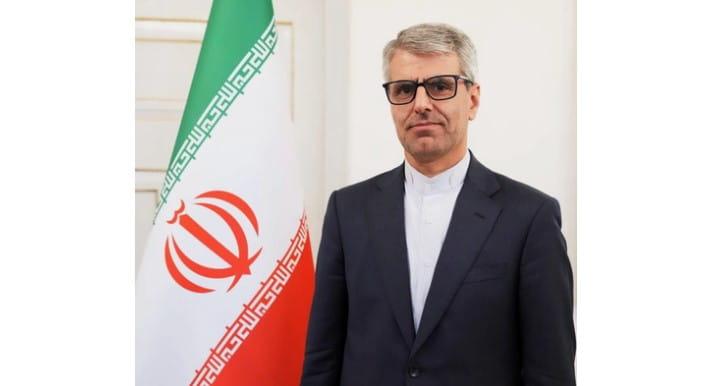
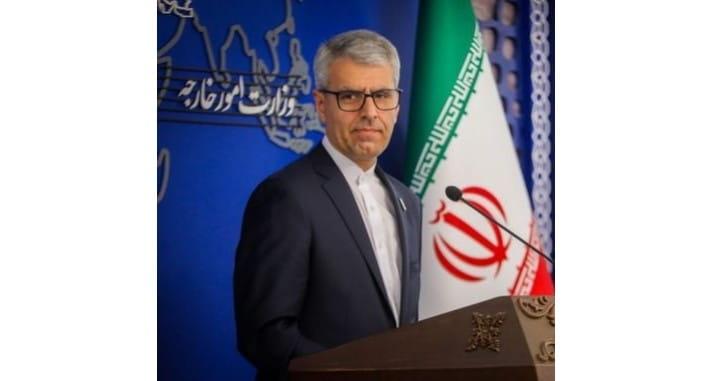
Tehran- Iran’s Foreign Ministry spokesperson Esmaeil Baqaei on Monday said that both Iran and the United States have reached conclusions on a large number of issues under discussion, but stressed that no final agreement is expected anytime soon.
Addressing a press conference, Baqaei said no specific timeline has been fixed for finalising any understanding between the two countries. According to Tasnim News Agency, he also pointed to what he described as inconsistent political behaviour in Washington, saying that contradictory statements from the US within short periods make negotiations more difficult.
Baqaei claimed that decision-making in the US appears disorganised due to resignations, congressional opposition, public opinion pressures, and internal contradictions. He added that such a situation has created room for the influence of other actors, including elements linked to Israel.
Speaking about the ongoing discussions, the Iranian spokesperson said Tehran remains committed to achieving an outcome that protects its national interests and rights. He added that any final result would only be announced after an agreement is fully reached.
On reports suggesting a 60-day negotiation framework, Baqaei said the current focus is on discussing details related to a memorandum and other matters during that period. He clarified that Iran is not currently discussing detailed nuclear issues and that the proposed 14-article memorandum is mainly centred on ending the conflict.
His remarks came a day after Marco Rubio said that “significant progress” had been made in diplomatic efforts between Washington and Tehran.
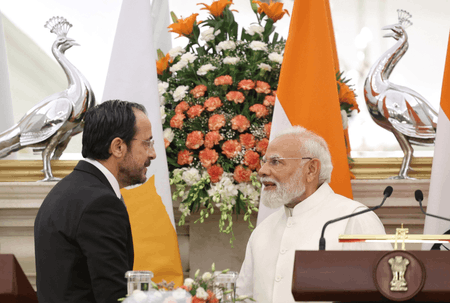
Speaking during a joint press conference with S. Jaishankar in New Delhi, Rubio hinted that the world could soon receive “good news” regarding the Strait of Hormuz and broader diplomatic efforts aimed at preventing Iran from developing nuclear weapons.
Rubio reiterated the stance of Donald Trump that Iran should never possess nuclear weapons. He said the ultimate objective of the negotiations is to ensure that Iran can never develop or own a nuclear weapon as long as Trump remains US President.
He also said that the US and its Gulf partners are working on a framework that would ensure the Strait of Hormuz remains fully open for international shipping without tolls. However, Rubio stressed that such an arrangement would require Iran’s full acceptance and implementation.
Calling the Strait of Hormuz an international waterway, Rubio accused Iran of threatening commercial vessels and said such actions violate international law. He warned that allowing such behaviour to continue could create a dangerous global precedent.
At the same time, Rubio emphasised that President Trump still prefers a diplomatic solution over military action. However, he added that the issue would ultimately be resolved “one way or the other.”
With inputs from IANS



| 14-09-2018 | ||||||
| Sl No. | Parameters | Actual Data(µg/m3) | Standard Limit(µg/m3) |
|---|---|---|---|
| 1 | PM 10 | 64 | 100 |
| 2 | PM 2.5 | 33 | 60 |
| 3 | SO2 | 55.3 | 80 |
| 4 | NO2 | 58.2 | 80 |
| 14-09-2018 | ||||||
| Station | Temperature(degree centigrade) | Rainfall(mm) | Relative humidity(%) | |||
|---|---|---|---|---|---|---|
| Max | Min | Past 24 hrs. | Since 1st March, 2018 | Max | Min | |
| Ranchi | 31.0 | 22.5 | 000.0 | 1010.1 | 95 | 66 |
| Jamshedpur | 34.1 | 26.2 | 000.0 | 1252.8 | 87 | 58 |
| Bokaro | 33.5 | 24.6 | 015.2 | 824.0 | 92 | 79 |
| Daltonganj | 32.6 | 24.9 | 004.2 | 960.9 | 95 | 67 |
© Copyright
Reporter Post.All Rights Reserved |
Powered by: Aptilogic Software |
 |
Page rendered in 0.0935 seconds.
|
Page rendered in 0.0935 seconds.