
Tue, April 21, 2026

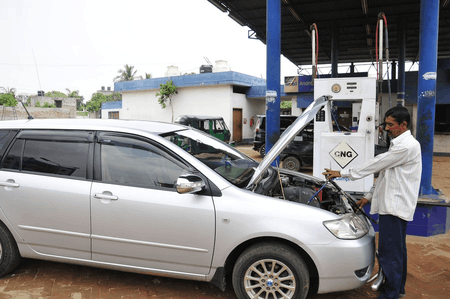
Dhaka — Bangladesh is grappling with worsening fuel disruptions as panic buying triggered by a recent price hike has led to long queues at petrol pumps, severely affecting daily life across the country.
The government revised fuel prices through a notification issued by the Power Division Bangladesh on April 18, citing rising global oil prices. Under the new rates, diesel prices have increased by Tk 15 per litre, octane by Tk 20, petrol by Tk 19, and kerosene by Tk 18, with the changes coming into effect from Sunday night.
Despite repeated assurances from the Bangladesh Petroleum Corporation that there is no nationwide shortage, ground reports suggest otherwise. Long queues continue to be seen at fuel stations, with commuters, transport operators, and small business owners waiting for hours to refuel.
The situation has had a direct impact on livelihoods. Ride-sharing drivers and transport workers report significant losses in income due to time spent in queues, while daily commuters are struggling to manage routine travel. The disruption has also affected small businesses that depend heavily on fuel for operations.
Officials attribute the crisis to a sudden spike in demand and logistical challenges in distribution. While supply may be adequate at a macro level, gaps in transportation scheduling and local availability have created bottlenecks at retail outlets.
Power, Energy and Mineral Resources Minister Iqbal Hassan Mahmood Tuku described the situation as “wartime,” pointing to global market pressures and the need to manage fuel imports using foreign currency.
However, the move has drawn criticism from consumer groups. M. Shamsul Alam of the Consumers Association of Bangladesh called the sudden price hike a “breach of trust,” noting that the government had earlier indicated prices would not be revised mid-month.
While authorities continue to maintain that supplies remain stable, the persistent queues highlight deeper issues in distribution efficiency and declining public confidence. Experts warn that without better logistics, transparent communication, and long-term energy planning, such disruptions could become more frequent amid ongoing global oil market volatility.
With inputs from IANS




| 14-09-2018 | ||||||
| Sl No. | Parameters | Actual Data(µg/m3) | Standard Limit(µg/m3) |
|---|---|---|---|
| 1 | PM 10 | 64 | 100 |
| 2 | PM 2.5 | 33 | 60 |
| 3 | SO2 | 55.3 | 80 |
| 4 | NO2 | 58.2 | 80 |
| 14-09-2018 | ||||||
| Station | Temperature(degree centigrade) | Rainfall(mm) | Relative humidity(%) | |||
|---|---|---|---|---|---|---|
| Max | Min | Past 24 hrs. | Since 1st March, 2018 | Max | Min | |
| Ranchi | 31.0 | 22.5 | 000.0 | 1010.1 | 95 | 66 |
| Jamshedpur | 34.1 | 26.2 | 000.0 | 1252.8 | 87 | 58 |
| Bokaro | 33.5 | 24.6 | 015.2 | 824.0 | 92 | 79 |
| Daltonganj | 32.6 | 24.9 | 004.2 | 960.9 | 95 | 67 |
© Copyright
Reporter Post.All Rights Reserved |
Powered by: Aptilogic Software |
 |
Page rendered in 0.3653 seconds.
|
Page rendered in 0.3653 seconds.