Thu, April 16, 2026
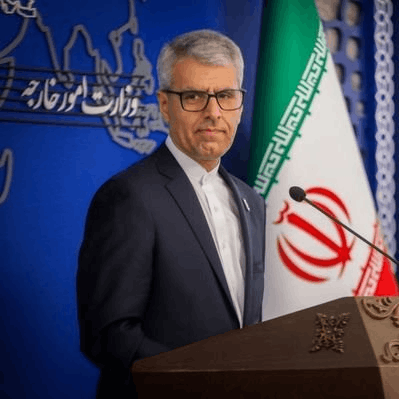
Iran has firmly ruled out any compromise on its nuclear enrichment programme, asserting that its rights are protected under international law and cannot be negotiated away.
Foreign Ministry spokesperson Esmaeil Baqaei stated that Iran’s entitlement to peaceful nuclear energy is rooted in the Nuclear Non-Proliferation Treaty (NPT). He dismissed Western speculation around Iran’s enrichment activities, emphasizing that these rights are neither concessions nor privileges granted by external powers.
Baqaei stressed that as long as Iran remains a signatory to the NPT, it is entitled to fully utilise the treaty’s provisions, including uranium enrichment for peaceful purposes.
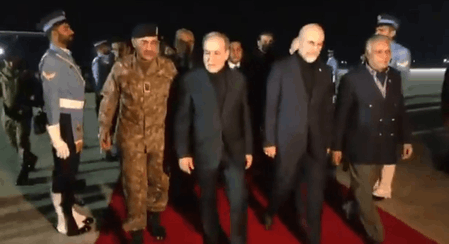
Addressing recent reports about United States–Iran talks held in Pakistan, he clarified that no detailed negotiations on sensitive issues have taken place yet. According to him, any potential agreement must first be built on a comprehensive framework before specific topics—especially those linked to conflict and security—are discussed.
On regional matters, Baqaei rejected claims that Iran has reduced its support for allies in Lebanon, maintaining that Tehran continues to back what it calls legitimate resistance. He also accused Israel of failing to uphold ceasefire commitments, particularly in relation to Lebanon.
He added that under international agreements, if one party violates its obligations, the other is justified in scaling back its own commitments proportionately—dismissing allegations that Iran has abandoned its regional positions.
Turning to maritime security, Baqaei opposed proposals for a United Nations-led coalition in the Strait of Hormuz. He argued that Iran, along with regional countries, is fully capable of maintaining stability in the vital oil transit route.
Criticising Washington, Baqaei described US involvement in the region as “warmongering,” claiming that recent disruptions in the Hormuz area stem from what he termed an imposed conflict involving the United States and Israel.
He warned that foreign intervention would only escalate tensions, while reiterating that regional cooperation—without external interference—remains the most effective way to ensure long-term stability.
With inputs from IANS



| 14-09-2018 | ||||||
| Sl No. | Parameters | Actual Data(µg/m3) | Standard Limit(µg/m3) |
|---|---|---|---|
| 1 | PM 10 | 64 | 100 |
| 2 | PM 2.5 | 33 | 60 |
| 3 | SO2 | 55.3 | 80 |
| 4 | NO2 | 58.2 | 80 |
| 14-09-2018 | ||||||
| Station | Temperature(degree centigrade) | Rainfall(mm) | Relative humidity(%) | |||
|---|---|---|---|---|---|---|
| Max | Min | Past 24 hrs. | Since 1st March, 2018 | Max | Min | |
| Ranchi | 31.0 | 22.5 | 000.0 | 1010.1 | 95 | 66 |
| Jamshedpur | 34.1 | 26.2 | 000.0 | 1252.8 | 87 | 58 |
| Bokaro | 33.5 | 24.6 | 015.2 | 824.0 | 92 | 79 |
| Daltonganj | 32.6 | 24.9 | 004.2 | 960.9 | 95 | 67 |
© Copyright
Reporter Post.All Rights Reserved |
Powered by: Aptilogic Software |
 |
Page rendered in 0.0633 seconds.
|
Page rendered in 0.0633 seconds.