Wed, October 14, 2026


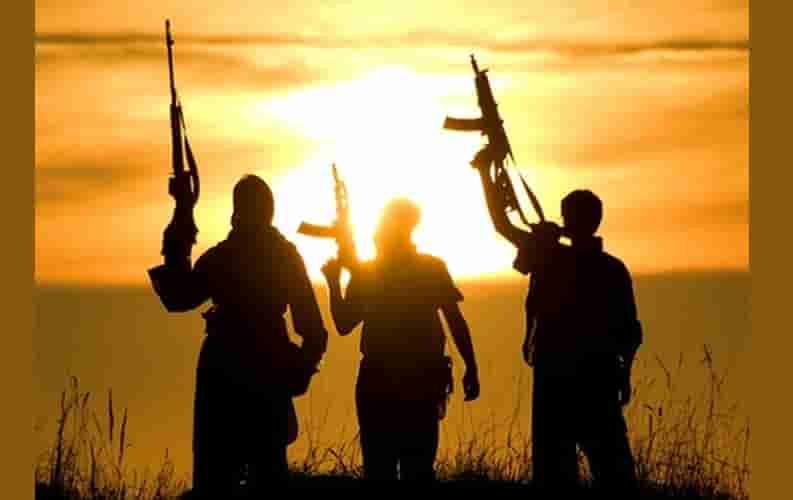
New Delhi — Indian security agencies have identified developments in Bangladesh and renewed activities by Pakistan’s Inter-Services Intelligence (ISI) as the most significant internal security challenges for India in the coming year, particularly for the northeastern states.
According to multiple Intelligence Bureau (IB) assessments, the deteriorating situation in Bangladesh, combined with Pakistan’s efforts to destabilise the region, poses a serious threat. Officials said that at least three intelligence reports have flagged Bangladesh and the northeast as key areas of concern for 2026.
Senior officials noted that two highly volatile neighbouring countries — Myanmar and Bangladesh — are scheduled to hold elections this year, raising the likelihood of instability. Given the worsening security environment in both countries and heightened international scrutiny, the electoral processes are expected to be particularly sensitive.
India is especially concerned about the Bangladesh elections slated for February 12. With the Awami League barred from contesting, the political battle is largely between the Bangladesh Nationalist Party (BNP) and the ISI-backed Jamaat-e-Islami. Intelligence officials believe this political vacuum has created fertile ground for extremist and anti-India forces.
Under the Muhammad Yunus regime, officials claim that persecution of minorities has intensified, with reports of violent incidents emerging on a daily basis. Intelligence inputs also suggest that Yunus, under pressure from Jamaat-e-Islami, has adopted a noticeably conciliatory stance towards Pakistan. This has reportedly resulted in policy relaxations such as opening sea routes and easing visa norms.
An official explained that while Myanmar remains unstable, it does not display overt anti-India sentiment. Bangladesh, however, presents a more complex challenge due to growing anti-India rhetoric. Jamaat-e-Islami has traditionally held anti-India views, but similar rhetoric is now being echoed by the National Citizen Party (NCP).
Hasnat Abdullah, a senior NCP leader, has allegedly threatened to provide shelter to anti-India elements. Intelligence agencies believe that several political outfits in Bangladesh view anti-India sentiment as an effective electoral strategy. This, officials say, explains the apparent leniency shown by the Bangladeshi establishment towards extremist groups such as Harkat-ul-Jihadi Islami (HuJI) and Jamaat-ul-Mujahideen Bangladesh (JMB).
According to intelligence officials, these groups are being nurtured by both the Yunus regime and the ISI with the objective of destabilising India’s northeastern region. Officials also pointed to repeated references by Yunus describing the northeast as “landlocked,” as well as the circulation of “Greater Bangladesh” maps within Bangladesh, which they described as part of a deliberate ISI-backed strategy to inflame tensions.
Alongside provocative rhetoric, the ISI is believed to be attempting to activate sleeper modules in India’s northeastern states. Earlier this week, Assam Police busted a Bangladesh-linked terror module and arrested 11 individuals. Investigators said the module was activated by the ISI to carry out terror strikes in the run-up to the Bangladesh elections. The group operated under the name Imam Mahmuder Kafila (IMK), which officials described as a proxy of the JMB.
The Intelligence Bureau has warned that border areas are likely to remain highly vulnerable in the run-up to elections in both Bangladesh and Myanmar. Any outbreak of violence in these countries could spill over into India’s northeastern states and West Bengal.
Officials further cautioned that during this sensitive period, insurgent groups operating from Myanmar and ISI-backed elements in Bangladesh may attempt to infiltrate India. An IB official said there was credible intelligence suggesting plans to push large numbers of illegal immigrants into the northeast and West Bengal, along with arms, ammunition, fake currency and narcotics.
Another senior official said New Delhi would adopt a wait-and-watch approach until the election processes in neighbouring countries conclude. Until then, securing the borders would remain the top priority to ensure that the internal security situation does not deteriorate, the official added.
With inputs from IANS



© Copyright
Reporter Post.All Rights Reserved |
Powered by: Aptilogic Software |
 |
Page rendered in 0.0126 seconds.
|
Page rendered in 0.0126 seconds.