Thu, October 15, 2026
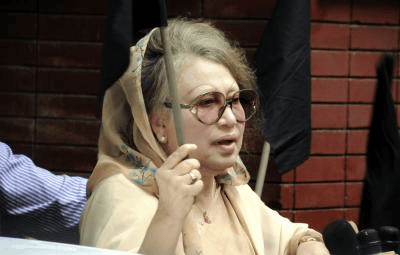
New Delhi: The passing of former Bangladesh Prime Minister and BNP chairperson Khaleda Zia has introduced a major new variable into Bangladesh’s political landscape just weeks ahead of the February 12 national elections. Zia, 80, died on Monday morning after a prolonged illness, having been on life support for the past several weeks.
Political analysts believe her death is likely to significantly strengthen the electoral prospects of the Bangladesh Nationalist Party (BNP), which was already widely viewed as a frontrunner. A strong sympathy wave, combined with existing organisational momentum, is expected to translate into a higher seat tally for the party.
Observers note that Khaleda Zia had been largely absent from active politics in recent years due to her health. Although the BNP and Jamaat-e-Islami had jointly mobilised during the political upheaval that led to the exit of Sheikh Hasina, the alliance did not continue thereafter. Despite having governed together in the past, both parties chose to contest the upcoming elections independently.
The BNP’s position was further strengthened by the return of Tarique Rahman, Khaleda Zia’s son, who came back to Bangladesh after 17 years in exile. His return drew large crowds and injected renewed energy into the party’s cadre base. Rahman has filed nominations from two constituencies and is widely seen as the leading contender for the prime minister’s post should the BNP secure a majority.
Recent opinion polls indicate that the BNP is leading the race, ahead of Jamaat-e-Islami and the newly formed National Citizen Party (NCP). While Jamaat has remained relatively competitive, the NCP has slipped further behind due to internal divisions and factional splits.
Khaleda Zia’s death is expected to reshape these dynamics. The nationwide expressions of grief following her passing underline her enduring popularity and are likely to amplify the sympathy factor in favour of the BNP during the campaign.
Amid the ongoing political uncertainty following Sheikh Hasina’s departure from the country, India has initiated outreach to the BNP leadership. Both sides have signalled a willingness to maintain cordial and pragmatic relations. This development, however, has reportedly unsettled Pakistan’s Inter-Services Intelligence (ISI), which has traditionally backed Jamaat-e-Islami as its primary political partner in Bangladesh.
Indian officials assess that while the BNP has historically adopted an anti-India posture during its periods in power, it has generally been more pragmatic than Jamaat, which has openly espoused hostile rhetoric against India. Although Tarique Rahman has previously faced allegations of being close to the ISI, analysts suggest there are indications of a more balanced approach, with Rahman acknowledging the importance of maintaining functional ties with India.
According to intelligence assessments, the rapidly evolving political situation has prompted the ISI to intensify its engagement with various political actors in Bangladesh. There are concerns that the agency is attempting to influence the BNP leadership through financial and political channels, driven by apprehensions that the party may be less amenable to external control than Jamaat.
Officials believe the BNP will prominently invoke Khaleda Zia’s legacy throughout its election campaign. Her death is widely seen as a major boost for the party, reducing the likelihood of Jamaat emerging as a dominant force in the next government—an outcome that has reportedly alarmed Pakistan’s intelligence establishment.
Indian intelligence agencies are closely monitoring activities at the Pakistan High Commission in Dhaka, where ISI-linked elements are suspected of attempting to influence the electoral process. The agency is believed to be seeking leverage over the BNP to counter New Delhi’s diplomatic outreach.
Analysts emphasise that much will depend on Tarique Rahman’s political choices in the coming weeks. While he has publicly expressed an interest in constructive relations with India, the durability of that stance remains uncertain. Observers point to his initial post-return engagements—including outreach to Muhammad Yunus and visits linked to polarising figures—as indicators that will require careful scrutiny.
Ultimately, experts say Rahman’s approach to foreign relations, particularly with India, will be shaped by whether he prioritises long-term national stability and economic progress or succumbs to external pressures seeking to steer Bangladesh’s political direction.
With inputs from IANS



© Copyright
Reporter Post.All Rights Reserved |
Powered by: Aptilogic Software |
 |
Page rendered in 0.0113 seconds.
|
Page rendered in 0.0113 seconds.