Mon, October 12, 2026

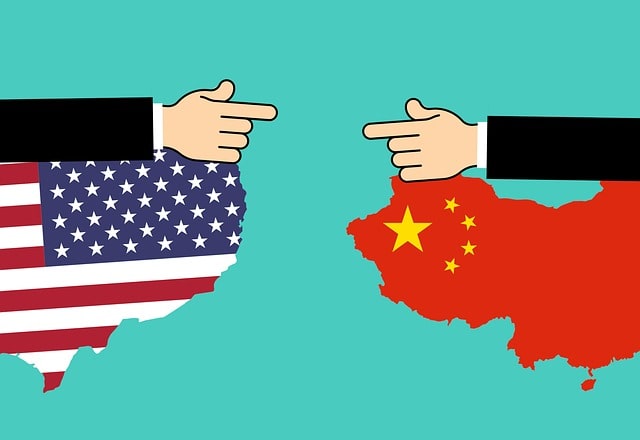
Representational Pic
The trade conflict between the United States and China escalated sharply on Monday as both countries imposed their biggest new rounds of tariffs, bringing roughly half of the goods traded between the world's two largest economies under additional duties.
US President Donald Trump's latest 10 per cent tariff on $200 billion worth of Chinese imports came into effect, covering thousands of products ranging from food seasonings and baseball gloves to network equipment and industrial machinery components.
China responded with tariffs on $60 billion worth of US products. The measures affect more than 5,200 categories of American imports, including chemicals, industrial goods and medical equipment, according to The Washington Post.
The latest escalation leaves both economies facing higher costs and greater uncertainty, while there were no new trade negotiations scheduled to resolve the dispute.
Beijing strongly criticised Washington's trade policy as the new tariffs took effect. In a report issued by the Chinese government, the Trump administration was accused of pursuing “trade bullying” and using extreme economic pressure to advance US interests.
The report, quoted by Xinhua, accused Washington of abandoning principles of mutual respect and equal consultation and instead pursuing unilateralism, protectionism and economic dominance.
The Trump administration has argued that the tariffs are intended to address what it considers unfair Chinese trade practices, including the alleged theft of intellectual property and policies that disadvantage US businesses.
China has rejected those accusations and has repeatedly described the US measures as protectionist and an attempt to pressure its economy.
The latest tariffs affect a wide range of everyday and industrial products. Economists warned that higher import duties could eventually increase the prices of food, clothing, furniture, toys and automobiles, while companies facing higher costs could respond by reducing investment or cutting jobs.
The risk of further escalation remained high. Trump had previously warned that any Chinese retaliation would trigger additional tariffs on another $267 billion worth of Chinese goods. If implemented, the measure could cover virtually all Chinese products imported into the US.
The imbalance in bilateral trade has also limited China's ability to match US tariff measures dollar-for-dollar. China imported around $130 billion worth of American goods in 2017, compared with roughly $506 billion in Chinese goods imported by the US.
Chinese officials have therefore indicated that Beijing could turn to “qualitative” measures beyond tariffs if the confrontation continues.
The dispute represents a significant challenge for global businesses because the US and China are deeply integrated through manufacturing and supply chains. Prolonged tariff increases could affect not only American and Chinese companies but also businesses in other countries that depend on components, raw materials and consumer goods from the two markets.
With neither side showing an immediate willingness to back down, concerns were growing that the trade dispute could develop into a prolonged economic confrontation rather than a short-term tariff battle.



© Copyright
Reporter Post.All Rights Reserved |
Powered by: Aptilogic Software |
 |
Page rendered in 0.0156 seconds.
|
Page rendered in 0.0156 seconds.