Sun, October 11, 2026

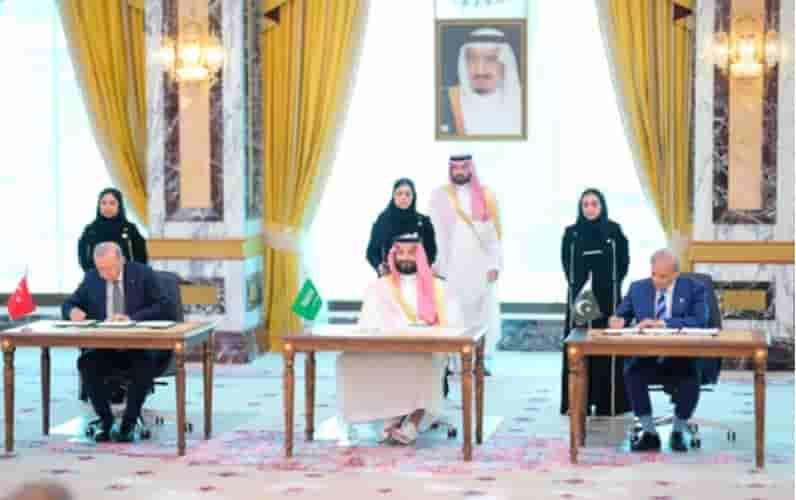
Photo: IANS
Iran has criticised the Saudi Arabia-Pakistan-Turkey defence pact after it became operational, warning that any intervention in Yemen could have undesirable consequences for regional stability.
According to a report by Iran International, the trilateral arrangement entered its operational phase on October 5 amid an escalation in Houthi missile and drone attacks targeting Saudi infrastructure. Turkey and Pakistan reportedly began taking measures to support Saudi Arabia.
Iranian Foreign Ministry spokesman Esmail Baghaei, responding to reports that tens of thousands of Pakistani troops could be deployed to Saudi Arabia, said Tehran had also heard the reports and hoped they were unfounded.
“We have also heard this rumour, and we hope it is not true,” Baghaei said.
“The countries of the region are well aware that any intervention in the Yemen issue could have undesirable consequences for the region,” he added. He also expressed hope that agreements such as the Mecca pact would not be used “against the interests and welfare of the Muslim community”.
Iranian Foreign Minister Abbas Araghchi, without directly naming the defence arrangement, urged neighbouring countries to pursue “self-reliance” and policies based on “genuine brotherhood”. He also said such agreements would not constrain Iran.
Several Iranian lawmakers have played down the pact's significance. Ahmad Bakhshayesh, a member of Parliament's National Security and Foreign Policy Commission, described it as a “paper and political pact”.
Ebrahim Rezaei, another member of the committee, questioned whether the agreement could guarantee Saudi Arabia's security.
“The Saudis should know that a paper agreement with Turkey and Pakistan will not bring them security, just as years of one-sided milking of the Americans did not bring them security,” Rezaei wrote on X. He urged Riyadh to change its policies rather than depend on other countries for security.
Iranian criticism has focused particularly on Pakistan, partly because Islamabad has played a prominent role in mediating between Tehran and Washington.
According to the report, Iranian lawmaker Ahmad Naderi questioned Pakistan's neutrality, arguing that its involvement alongside Saudi Arabia in the Yemen conflict would undermine its position as a mediator.
“Pakistan’s entry alongside Saudi Arabia into the war against the people of Yemen…shows that Pakistan should no longer be considered a mediator but a regional intervenor,” Naderi wrote on X.
Iranian state media have also criticised the pact's operational status and highlighted warnings from Houthi officials directed at Turkey and Pakistan.
Tasnim characterised the development as “Turkey and Pakistan join the Saudi war against the Yemeni people”. Nour News, which is close to Iran's Supreme National Security Council, questioned the arrangement's objectives, asking: “Mecca alliance or alliance against the oppressed people of Yemen?!”
The criticism underscores Tehran's concerns over the potential regional implications of closer security cooperation between Saudi Arabia, Pakistan and Turkey, particularly in relation to Yemen.



© Copyright
Reporter Post.All Rights Reserved |
Powered by: Aptilogic Software |
 |
Page rendered in 0.0117 seconds.
|
Page rendered in 0.0117 seconds.