Sat, September 26, 2026

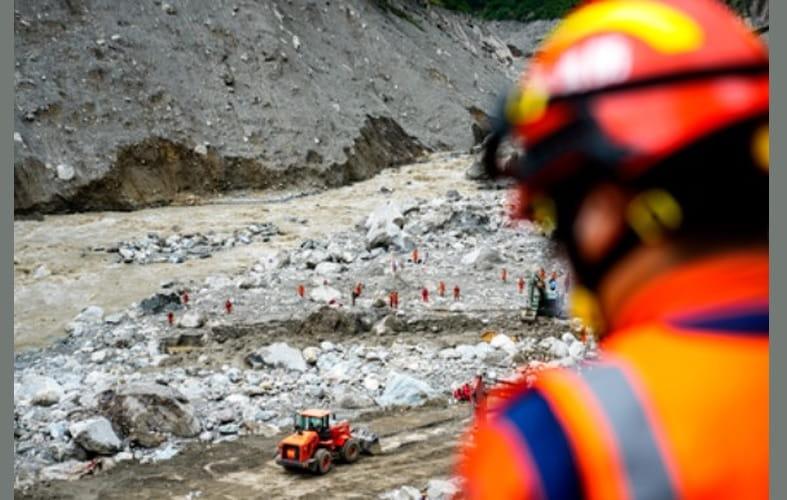
Photo: IANS
Tight restrictions imposed by Chinese authorities on journalists and independent media are making it difficult to establish the true scale of the devastation caused by recent flash floods in Tibet, Reporters Without Borders (RSF) has said.
The international press freedom organisation criticised Beijing for restricting independent reporting from the disaster-hit areas, saying that neither Tibetan independent media outlets nor international news organisations have been allowed to freely access the region and report on the situation.
According to RSF, Chinese authorities have largely limited flood coverage to state-controlled media. Reports have focused on rescue operations and the government's response, while providing limited independent information about the extent of damage, casualties and conditions on the ground.
The organisation said the restrictions are part of a broader pattern of tight media control in Tibet. It noted that journalists working in the region face extensive restrictions, while information that does not conform to official narratives can be difficult to verify or circulate.
RSF Asia-Pacific advocacy head Aleksandra Bielakowska described Tibet as a "de facto information black hole", arguing that the lack of independent reporting makes it almost impossible to determine the full impact of the disaster.
She said state-controlled outlets operate under guidelines set by the Chinese Communist Party's Propaganda Department, limiting the scope of reporting and potentially preventing information that could portray the authorities negatively from reaching the wider public.
The difficulties faced by journalists have also been compounded by concerns among Tibetans living in exile. Kalsang Jigme, editor-in-chief of independent outlet Tibet Radio, told RSF that information controls appeared to be particularly strict following the latest floods.
Jigme said he had attempted to contact Tibetans in exile whose relatives live in the affected areas, but many were hesitant to speak publicly because they feared that doing so could put their family members in Tibet at risk.
Information gathered by Tibet Radio and cited by RSF suggests that the actual death toll may be considerably higher than the figure officially reported by Chinese authorities. RSF said the outlet had independently confirmed that at least 29 Tibetans were believed to have died, while China's official toll stood at 16.
However, independent verification remains difficult because access to affected areas and reliable sources is severely restricted. Tibetan media organisations have said they are continuing efforts to verify reports of casualties and destruction.
RSF also highlighted censorship on Chinese social media platforms, including WeChat, where posts and references relating to the floods have reportedly been removed or restricted. Chinese authorities have also reportedly taken action against at least 10 internet users accused of spreading "rumours" about the disaster, according to the state-run Beijing News.
The disaster has had consequences beyond Tibet. The major flooding that struck Nepal's Rasuwa district on August 26 originated in the Tibetan region of China before flowing into the transboundary Bhote Koshi River. The resulting destruction in Nepal killed more than a thousand people and caused extensive damage across the Himalayan region.
The competing casualty figures and limited independent access have added to concerns over the reliability of information emerging from the Tibetan side of the disaster. With journalists unable to freely investigate affected communities, assess infrastructure damage or independently verify casualty reports, the full humanitarian impact remains difficult to establish.



© Copyright
Reporter Post.All Rights Reserved |
Powered by: Aptilogic Software |
 |
Page rendered in 0.0077 seconds.
|
Page rendered in 0.0077 seconds.