Wed, September 02, 2026
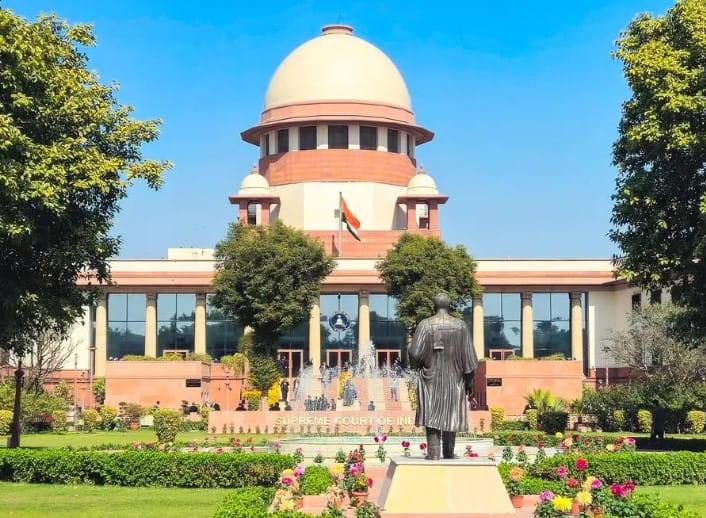
The long-running dispute over the appointment of Jharkhand’s Director General of Police (DGP) is set to come up before the Supreme Court again on September 7. The court held a brief hearing in the matter on Wednesday and directed that the case be taken up on Monday.
The hearing was conducted by a bench comprising Chief Justice of India Surya Kant and Justices Joymalya Bagchi and V. Mohan. At the outset, senior advocate Kapil Sibal, appearing for the Jharkhand government, informed the bench that he had not received the report submitted by the court-appointed Amicus Curiae.
Sibal told the court that without access to the report, he was not in a position to properly respond to the issues before the bench. He requested the court to direct that a copy of the report be provided to the state government and sought a hearing on September 7 or on a later date.
The bench accepted the request and directed that the Amicus Curiae's report be supplied to the Jharkhand government before the matter is heard again.
The report has assumed significance because the Supreme Court had specifically asked the Amicus Curiae to examine the circumstances surrounding the appointment of the DGP in Jharkhand and place its views before the court.
Supreme Court guidelines at the centre of the dispute
The case is closely linked to the Supreme Court's landmark 2006 judgment in Prakash Singh vs Union of India, which laid down key reforms for police administration across the country.
Under the court's directions, states are required to select a regular DGP from a panel of three senior police officers empanelled by the Union Public Service Commission (UPSC), rather than making appointments through an ad hoc or acting arrangement. The selected DGP is also expected to have a minimum tenure of two years, subject to the conditions laid down by the court.
The implementation of these directions has remained a contentious issue in Jharkhand, particularly over the procedure followed by the state government for selecting its police chief.
Amicus Curiae report submitted to Supreme Court
During the August 18 hearing, the Supreme Court handed over the relevant documents relating to the DGP appointment to the court-appointed Amicus Curiae and asked for an assessment of the matter.
The Amicus Curiae has since submitted the report to the Supreme Court. However, the Jharkhand government had not been provided with a copy, prompting Sibal to seek access to the report during Wednesday's hearing.
The contents of the report could therefore become an important factor in the next stage of the proceedings, particularly if it raises questions about the state's appointment procedure or compliance with the Supreme Court's earlier directions.
State government had earlier received show-cause notice
The Supreme Court had earlier issued a show-cause notice to the Jharkhand government in connection with the DGP appointment dispute.
The state was asked to explain why the names of eligible officers had not been forwarded to the UPSC for preparation of the panel required under the Supreme Court's police reform guidelines.
The court's intervention has brought renewed attention to the manner in which Jharkhand has been appointing its police chiefs and whether the state's procedure is consistent with the framework established by the apex court.
Jharkhand framed its own DGP appointment rules
The dispute gained momentum after the Jharkhand government framed its own DGP Selection and Appointment Rules, 2024, instead of following the procedure outlined in the Supreme Court's Prakash Singh judgment.
For framing the rules, the state government relied on provisions of the General Clauses Act, 1897 and the Police Act, 1861. The government argued that these provisions provide the legal basis for making rules concerning police administration and appointments.
The 2024 rules subsequently became the basis for the appointment of Anurag Gupta as Jharkhand DGP. After Gupta resigned, Tadasha Mishra was also appointed under the same framework.
The legality of the state's rules was subsequently challenged before the courts.
Babulal Marandi challenged the appointment process
BJP leader Babulal Marandi filed two petitions in connection with the DGP appointment issue—one before the Jharkhand High Court and another before the Supreme Court.
The petition before the High Court challenged the validity of the DGP appointment rules framed by the state government.
In the Supreme Court, Marandi sought contempt proceedings against members of the committee constituted to select the DGP.
The Supreme Court later rejected the contempt-related petition. At the same time, it ordered that the petition challenging the validity of Jharkhand's DGP appointment rules be transferred from the High Court to the Supreme Court.
The matter was subsequently transferred to the apex court and is now part of the broader legal dispute over the state's DGP appointment mechanism.
What happens next
The September 7 hearing is likely to provide greater clarity on the Supreme Court's view of Jharkhand's 2024 DGP appointment rules and the state's compliance with the police-reform guidelines laid down in the Prakash Singh case.
A key issue before the court is whether a state can frame and follow its own mechanism for appointing a DGP when the Supreme Court has already prescribed a UPSC-based selection process. The court's consideration of the Amicus Curiae report could prove significant in determining the next course of action in the case.



© Copyright
Reporter Post.All Rights Reserved |
Powered by: Aptilogic Software |
 |
Page rendered in 0.1181 seconds.
|
Page rendered in 0.1181 seconds.