Wed, September 23, 2026

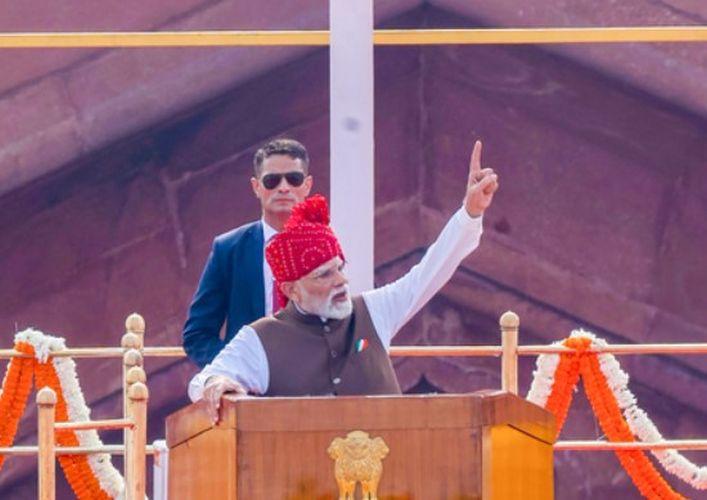
Photo: IANS
Prime Minister Narendra Modi announced a series of initiatives focused on education, youth development, sports, technology, civil defence, semiconductors and nuclear energy while addressing the nation from the Red Fort on the 80th Independence Day.
Among the key announcements were free online coaching for competitive examinations, a nationwide sports talent hunt for children, a modern civil defence volunteer network, expanded semiconductor manufacturing and a target to provide artificial intelligence (AI) training to one crore young people over the next year.
Modi said the proposed free online coaching programme would help students prepare for competitive examinations without the heavy financial burden associated with private coaching institutes.
“Coaching classes burden the poor and the middle class. We will provide free online coaching for various exams,” he said.
The Prime Minister also spoke about the social pressure that often pushes families to enrol their children in expensive coaching programmes, even when they struggle to afford them.
He said the government would bring together India's digital infrastructure, teachers and educational resources to create a nationwide platform offering free examination preparation.
Modi said the initiative could help families save substantial amounts of money while allowing parents to remain closer to their children instead of sending them away to coaching centres.
New civil defence network
The Prime Minister also announced plans to establish a large and modern Civil Defence volunteer network capable of responding to contemporary security threats and emergencies.
He said volunteers would be trained in modern systems and response methods so that they could help protect citizens during different types of crises.
The proposed network is expected to focus on improving preparedness at the community level, giving trained volunteers a role in emergency response and strengthening the country's overall civil defence capabilities.
Talent hunt for future Olympians
Sports featured prominently in Modi's Independence Day address. He said India's performance on the international stage has improved and highlighted initiatives such as the Target Olympic Podium Scheme (TOPS), Khelo India Games, University Games, Beach Games and Winter Games.
India, he said, is also a strong contender to host the 2036 Olympics and will host the 2030 Commonwealth Games in Ahmedabad.
However, Modi pointed out that Indian athletes still fail to qualify for a large number of Olympic events. The country currently has limited participation across many disciplines despite having a large population and a growing sporting ecosystem.
To address this gap, the government will launch a nationwide talent identification programme for children aged 5 to 15.
The programme will look for promising young athletes across the country, including areas that may not traditionally have access to high-level sporting facilities. Those identified as having potential will receive specialised training aimed at developing them into world-class athletes.
Modi set the long-term goal of India participating in at least three-fourths of all Olympic events by 2036. A broader talent pool, he said, would be essential to achieving that ambition.
Push for semiconductor self-reliance
The Prime Minister also placed strong emphasis on semiconductor manufacturing, describing chips as essential to almost every part of the modern economy, from electronic devices and medical equipment to transportation systems.
He said India has already established three major semiconductor manufacturing facilities and that production has begun for exports.
According to Modi, another five to eight semiconductor plants are expected to become operational over the next seven to eight years. The expansion is aimed at strengthening domestic manufacturing and reducing India's dependence on overseas supply chains for strategically important technology.
A stronger semiconductor ecosystem could also help India attract more electronics manufacturing, create skilled jobs and establish a larger domestic technology supply chain.
Nuclear power target for 2047
On energy security, Modi set an ambitious target of taking India's nuclear power capacity to 100 gigawatts by 2047.
He said the government is working towards commissioning five new nuclear reactors over the next six to seven years as part of the effort to expand nuclear generation.
The Prime Minister also highlighted India's progress in Fast Breeder Nuclear Technology, calling it an important milestone in the country's effort to achieve greater self-reliance in nuclear fuel.
One crore youth to receive AI training
AI skills were another major focus of the address. Modi announced a programme to provide AI skill training to one crore young people during the coming year.
He said the objective is to ensure that Indian youth have the expertise needed to compete globally and help India become a leading force in artificial intelligence.
The announcement comes as AI is rapidly changing employment, education, manufacturing and digital services. Large-scale training could help India build a workforce capable of developing and using AI technologies across multiple sectors.
Modi also pointed to the country's expanding startup ecosystem, saying more than 2.5 lakh startups are now operating in India and young entrepreneurs are playing an increasingly important role in creating employment.
Broader economic ambitions
The Prime Minister outlined several other long-term targets, including having 50 Indian companies among the Fortune 500, an Indian bank among the world's top five and significantly expanding India's strategic manufacturing and energy capabilities.
Taken together, the announcements reflect an effort to link India's long-term development goals with investments in human capital, technology, energy security and national preparedness.
The success of these initiatives, however, will depend on how effectively they are implemented across states and districts, particularly in ensuring that opportunities reach students, young athletes and aspiring technology professionals beyond the country's major urban centres.



© Copyright
Reporter Post.All Rights Reserved |
Powered by: Aptilogic Software |
 |
Page rendered in 0.0097 seconds.
|
Page rendered in 0.0097 seconds.