Wed, September 23, 2026

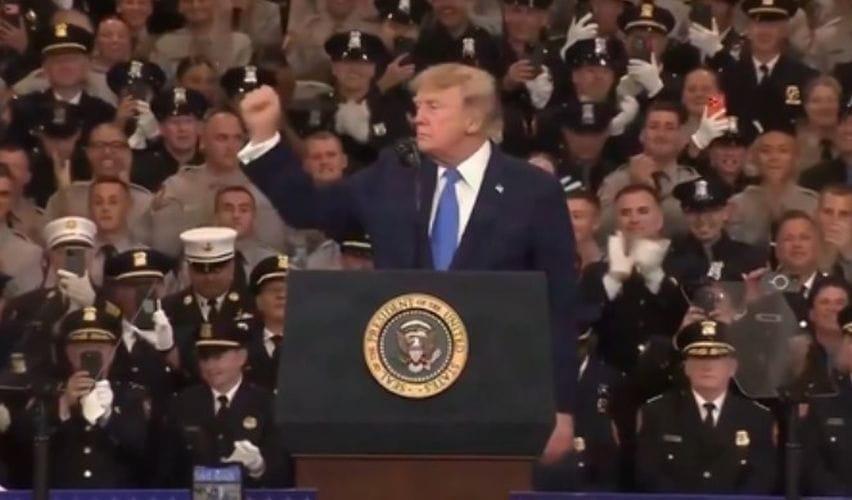
Photo: IANS
US President Donald Trump has said the United States could move to take control of the Strait of Hormuz and declare it US territory after the war with Iran ends, making an extraordinary claim over one of the world’s most strategically important waterways.
Speaking on Friday, Trump said that once the US finishes defeating Iran, he would “pretty soon” declare the Strait of Hormuz a US territory. He also claimed that the waterway had effectively already come under US control because of the blockade imposed on Iran.
“Essentially, that’s what it is. We have the blockade. No ships get through unless we want them to,” Trump said, arguing that US actions in the Strait were serving the interests of the international community.
Trump had hinted at the idea earlier this week. In a post on Truth Social on Wednesday, he wrote that the US had “total control” over the Strait and suggested that Washington might retain that control.
The comments come as the Strait remains at the centre of the confrontation between Washington and Tehran. Trump had said on August 3 that the strategically vital waterway would be “open literally” the following day, but shipping traffic has remained severely disrupted. Media reports said only nine ships passed through on Friday as the standoff continued.

Iran has rejected Trump’s claim. Deputy Foreign Minister Kazem Gharibabadi dismissed the proposed US takeover as “fantasies” and insisted that Iran retains authority over the waterway.
The Strait of Hormuz is one of the most important energy corridors in the world, linking the Persian Gulf with the Gulf of Oman and the wider Arabian Sea. A prolonged disruption to shipping through the strait can have a direct impact on global oil and gas supplies, potentially pushing up energy prices far beyond the region.
The issue has also become politically sensitive in the United States, where higher petrol prices are emerging as a campaign issue ahead of the November mid-term elections. Democrats have made the broader “affordability crisis” a key part of their electoral message.
Trump defended the higher fuel costs, arguing that Americans were paying a price for preventing Iran from acquiring nuclear weapons.
“For you to pay a tiny little bit more for your gasoline, just remember you’re doing it so that a very evil country cannot have a nuclear weapon,” he told an audience at a police academy in a New York suburb.
The average US petrol price was reported at around $1.08 per litre on Friday, while Brent crude rose to about $88 a barrel, gaining roughly 5 per cent over the week.
Trump’s proposal to make the Strait of Hormuz US territory would face enormous legal, diplomatic and military obstacles. The approximately 170-km-long waterway passes through territorial waters belonging to Iran, Oman and the United Arab Emirates, along with international waters.
Turning the entire strait into US territory would therefore require agreements with Oman and the UAE, while any attempt to incorporate Iranian territorial waters would represent a direct challenge to Iran’s sovereignty and international law.
There would also be major questions about the ability of the US military to maintain such control over the region indefinitely. The US aircraft carrier USS Abraham Lincoln, currently operating in the area, has already been involved in an extended deployment. Asked about reports of strain caused by the long deployment, Trump said it was “not nearly long enough” and added that another similar ship would replace it.
Trump’s latest comments also fit into his broader record of making territorial expansion a feature of his foreign-policy rhetoric. During his second presidential term, he repeatedly suggested that Canada could become the 51st US state and referred to former Canadian Prime Minister Justin Trudeau as “governor”. He has also renewed his push for US control of Greenland, which is an autonomous territory of Denmark.
Any move to formally claim the Strait of Hormuz, however, would be considerably more complicated than those earlier proposals, given the waterway’s international status, its importance to global energy markets and the competing territorial claims of countries bordering it.



© Copyright
Reporter Post.All Rights Reserved |
Powered by: Aptilogic Software |
 |
Page rendered in 0.007 seconds.
|
Page rendered in 0.007 seconds.