Sun, September 27, 2026

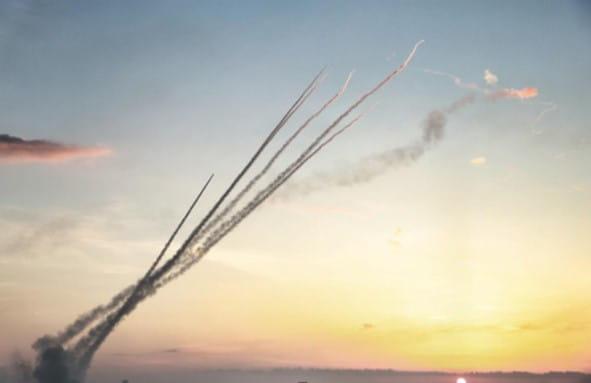
Washington: The United States has carried out military strikes against Iranian military infrastructure following the alleged downing of a U.S. Army Apache helicopter near the Strait of Hormuz, marking a significant escalation in tensions between Washington and Tehran.
The operation, ordered by U.S. President Donald Trump, was described by the U.S. Central Command (CENTCOM) as a self-defence response to the helicopter incident and recent threats to American forces and international shipping in the region.
In an official statement, CENTCOM said U.S. Air Force and Navy fighter jets used precision-guided munitions to target Iranian air defence systems, ground control stations, and surveillance radar sites located near the strategically important Strait of Hormuz.
“CENTCOM forces completed self-defense strikes against Iran at the Commander in Chief’s direction in response to the downing of a U.S. Army Apache helicopter,” the military command said.
President Trump earlier claimed that Iranian forces had shot down one of America's advanced AH-64 Apache helicopters while it was conducting patrol operations over the Strait of Hormuz. He stated that both pilots survived the incident and were rescued safely.
“I have just been informed by our great military that the Iranians shot down one of our highly sophisticated Apache helicopters while patrolling over the Strait of Hormuz,” Trump wrote on social media, adding that a response was necessary despite the crew members remaining unharmed.
The military action followed an earlier Pentagon announcement confirming that an Apache helicopter had gone down near the coast of Oman on June 8. At that time, officials said the cause of the crash was under investigation and did not indicate whether hostile fire was involved.
According to U.S. military officials, the helicopter crew was rescued within two hours through a coordinated operation involving U.S. Naval Forces Central Command, the 82nd Airborne Division, and supporting Air Force and Navy units.
Tuesday's strikes represent the first publicly acknowledged U.S. military action directly connected to the helicopter incident and underscore the increasingly volatile security situation in the Gulf region.
Following the operation, CENTCOM said American forces remain on high alert and are prepared to respond to any further threats against U.S. personnel, assets, or international maritime traffic.
The Strait of Hormuz remains one of the world's most critical maritime chokepoints, with nearly one-fifth of global oil shipments passing through the narrow waterway. Any military confrontation in the area has the potential to impact global energy markets and regional stability.
The latest developments are expected to draw close international attention as concerns grow over the possibility of a wider conflict in the Middle East.
WIth inputs from IANS



© Copyright
Reporter Post.All Rights Reserved |
Powered by: Aptilogic Software |
 |
Page rendered in 0.0068 seconds.
|
Page rendered in 0.0068 seconds.