Tue, September 22, 2026

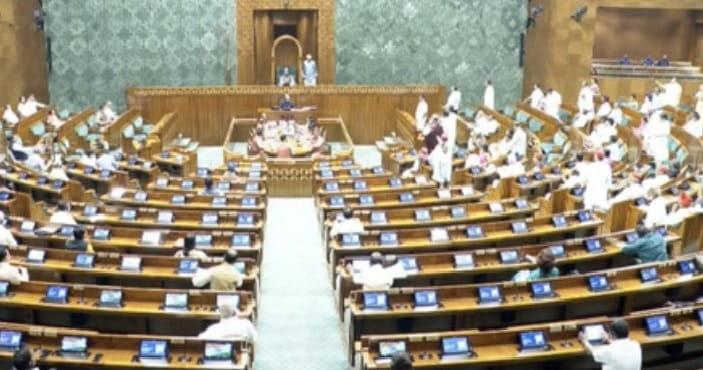
New Delhi: The Lok Sabha on Thursday passed the Prevention of Insults to National Honour (Amendment) Bill, 2026, paving the way for the national song Vande Mataram to receive legal protection similar to that accorded to the national anthem, Jana Gana Mana.
The Bill was cleared by a voice vote after a brief discussion, despite repeated protests by Opposition members that disrupted proceedings. It had already been passed by the Rajya Sabha on Wednesday and now awaits the President's assent to become law.
Once enacted, the legislation will make the intentional prevention, disruption or insult of the singing of Vande Mataram a punishable offence under the law.
The debate took place amid continued Opposition protests over the government's handling of alleged police excesses during student demonstrations linked to the NEET paper leak issue.
Opposing the Bill, DMK MP Kanimozhi alleged that the legislation was being imposed on the people and accused the government of attempting to deepen social divisions. She argued that India's founding leaders had deliberately adopted only the first two stanzas of Vande Mataram and claimed the new law was part of a divisive political agenda.
Calling the move undemocratic, she said Parliament should not pass such an important Bill amid disruptions and urged the government to listen to all stakeholders.
Defending the legislation, BJP MP Sambit Patra said Parliament had already held extensive discussions on Vande Mataram in the past and that the amendment simply provides the national song with long-overdue legal protection.
He also criticised the Congress leadership, saying that despite more than seven decades since Independence, the national song had not been granted the same legal status as the national anthem. According to him, the new law would ensure equal respect for both national symbols.
Minister of State for Home Affairs Nityanand Rai also backed the Bill, alleging that the Jawaharlal Nehru-led government had adopted only a truncated version of Vande Mataram for political reasons. He said the amendment was a necessary corrective step and described the national song as a symbol of national pride that would strengthen the vision of "Ek Bharat, Shrestha Bharat."
With Parliament's approval now complete, the Bill will become law after receiving the President's assent. Once notified, any deliberate act of obstructing, disrupting or insulting the singing of Vande Mataram will attract legal penalties under the amended law.
With inputs from IANS



© Copyright
Reporter Post.All Rights Reserved |
Powered by: Aptilogic Software |
 |
Page rendered in 0.0071 seconds.
|
Page rendered in 0.0071 seconds.