Sun, September 27, 2026

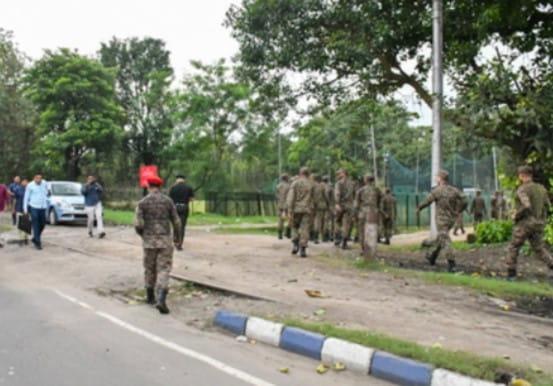
New Delhi: Political violence has long been woven into the fabric of West Bengal’s electoral history, often marked by intimidation, territorial control and revenge against defeated rivals. But in a rare shift, the latest political developments in the state have seen members of the victorious side allegedly becoming targets of violence.
From the Congress era to the rule of the Communist Party of India (Marxist)-led Left Front and later the All India Trinamool Congress, Bengal’s political culture has frequently been associated with euphemisms such as “Dum Dum Dawai”, “sayesta kora” and “chomke deoa” — phrases often used to imply punishment, intimidation or political domination.
The phrase “Dum Dum Dawai” traces its roots to the food movement protests of the 1960s, when severe shortages triggered widespread unrest across the state. Over time, it evolved into political slang suggesting “direct action” or forceful methods to settle disputes and maintain influence.
Throughout different political regimes, local strongmen and criminal networks allegedly continued to play a major role in maintaining territorial dominance. Political parties were often accused of using local muscle power during elections to control booths, intimidate opponents and influence rural governance structures.
Terms like “scientific rigging” became particularly associated with the Left Front years, referring to alleged voter manipulation, booth capturing and systematic intimidation that opposition parties claimed prevented fair elections.
The 2007 Nandigram violence became a turning point in Bengal politics, with allegations of state-backed coercion during protests against land acquisition significantly damaging the Left Front’s image.
When the All India Trinamool Congress came to power in 2011 under Mamata Banerjee, critics argued that the system of political coercion merely changed hands rather than disappearing. The Trinamool era later faced allegations linked to “cut money”, extortion networks and aggressive local-level politics.
The 2018 panchayat elections drew major controversy after opposition parties alleged that many candidates were prevented from filing nominations in several rural areas. Violent clashes during and after the polls left several people injured and dead.
Following the 2021 Assembly elections, the Bharatiya Janata Party, Congress and Left parties accused Trinamool workers of carrying out attacks on political opponents.
However, in the current political climate, the situation appears different. After the recent election results, even members of the winning side have reportedly faced violence and intimidation. Among the incidents was the killing of Chandranath Rath, personal secretary to senior BJP leader Suvendu Adhikari.
Adhikari has said that the new administration plans to reopen cases related to political violence to ensure justice for victims.
At the same time, internal tensions have also surfaced within the Trinamool Congress. Party spokesperson Riju Dutta claimed that BJP leaders treated him respectfully after the election verdict, while members of his own party allegedly targeted him.
The developments have once again highlighted how political violence continues to shape Bengal’s political landscape, even as the pattern of who becomes the victim appears to be changing.
With inputs from IANS



© Copyright
Reporter Post.All Rights Reserved |
Powered by: Aptilogic Software |
 |
Page rendered in 0.0076 seconds.
|
Page rendered in 0.0076 seconds.