Thu, October 22, 2026

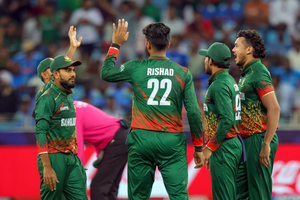
New Delhi - Bangladesh cricket has entered one of the most turbulent periods in its history after the International Cricket Council (ICC) excluded the team from the upcoming Men’s T20 World Cup, to be co-hosted by Sri Lanka and India, according to a report in Bangladeshi media.
An article published in *The Daily Star* noted that the setback goes far beyond missing a global tournament. “This is not merely the pain of missing a World Cup. Bangladesh cricket may be passing through its most fragile phase. Resilience is meaningful only when guided by a clear mission and vision—both of which appear to be absent at present,” the report observed.
The decision also drew concern from the World Cricketers’ Association, the global representative body for professional cricketers, which termed the development “a sad moment for the game,” reflecting widespread disappointment in a country where cricket holds deep emotional significance.
The report squarely placed responsibility on the country’s cricket administration, describing systemic failures and weak governance as key reasons behind the current crisis.
“Missing the World Cup is only part of the damage. Domestic cricket remains largely paralysed,” the article stated. While the Bangladesh Premier League (BPL) was completed, it ended amid controversy, with a match-fixing scandal emerging soon after the final, adding to a growing list of irregularities.
The Bangladesh Cricket Board (BCB), headed by former captain Aminul Islam Bulbul, is reportedly grappling with severe internal turmoil. Following allegations of match-fixing in the BPL, BCB Director Muhammad Mukhlesur Rahman stepped down as chairman of the Audit Committee. In another incident, a franchise adviser publicly alleged fixing during a Facebook Live session, further denting public confidence.
The situation has led to high-profile resignations, including that of influential director Ishtiaque Sadeque, and has exposed deep divisions within the board. The report also criticised the reinstatement of controversial figures such as M. Najmul Islam, previously removed for making derogatory remarks about players.
Adding to the unrest, Bangladesh Test captain Najmul Hossain Shanto publicly expressed frustration over uncertainty surrounding domestic schedules, highlighting the growing disconnect between players and the board.
The article described the BCB’s reported attempt to recall “the country’s most successful cricketer, Shakib Al Hasan, who is currently in exile,” as a “sensational” move that many view as an effort to deflect attention from administrative failures. “For many, the move lacks logic and appears to be a desperate attempt to divert focus from the World Cup exclusion,” it said.
The ICC has since confirmed that Scotland will replace Bangladesh in the tournament, with the BCB stating it will not pursue arbitration.
The report concluded that Bangladesh’s exclusion from the World Cup symbolises a deeper collapse in governance and long-term planning. With domestic cricket stalled and international opportunities shrinking, the sport faces one of its darkest moments. Unless the BCB outlines a clear and credible roadmap, Bangladesh risks losing not just matches, but its hard-earned cricketing identity.
“Bangladesh cricket is struggling to stay afloat—not only because of exclusion, but because a fight without purpose, clarity and vision rarely leads to recovery,” the article concluded.
With inputs from IANS



© Copyright
Reporter Post.All Rights Reserved |
Powered by: Aptilogic Software |
 |
Page rendered in 0.01 seconds.
|
Page rendered in 0.01 seconds.