Wed, November 04, 2026


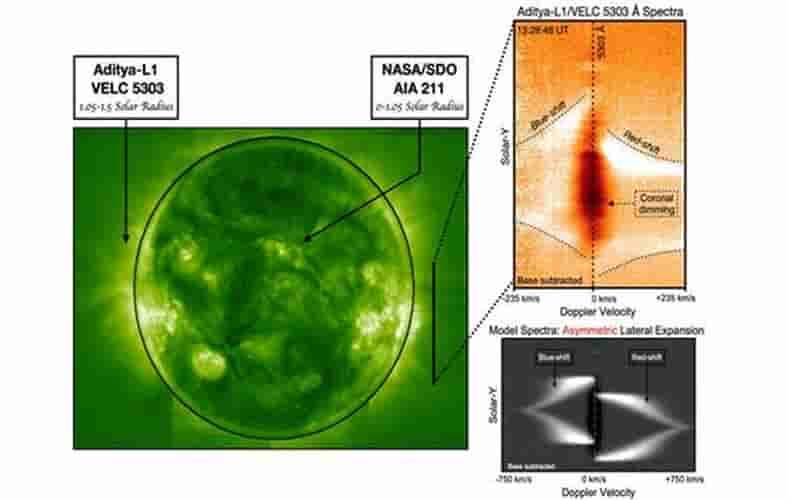
Photo: IANS
New Delhi: India's first space-based solar observatory, Aditya-L1, has provided scientists with new insights into the behaviour of coronal mass ejections (CMEs), massive eruptions of plasma and magnetic fields from the Sun that can disrupt satellites, communication networks and other space-based systems.
According to an official statement issued by the Ministry of Science and Technology on Tuesday, observations from the mission have revealed that these powerful solar eruptions do not expand uniformly in all directions, challenging the earlier assumption of symmetrical expansion.
The finding is significant for space-weather forecasting because variations in the expansion of a CME can influence its speed and trajectory as it travels through space towards Earth, potentially affecting the intensity and timing of space-weather disturbances.
Researchers from the Indian Institute of Astrophysics (IIA) combined observations from the Visible Emission Line Coronagraph (VELC) aboard Aditya-L1 with data from NASA's Solar Dynamics Observatory (SDO). They also used three-dimensional modelling to reconstruct the CME's complete geometry and understand how it evolved.
Explaining the significance of the discovery, Jayant Joshi of IIA, a co-author of the study published in *The Astrophysical Journal Letters*, said that the asymmetric shape of an early CME could influence how it interacts with the solar wind and experiences drag while travelling through the heliosphere. These factors can ultimately affect its speed and estimated arrival time at Earth.
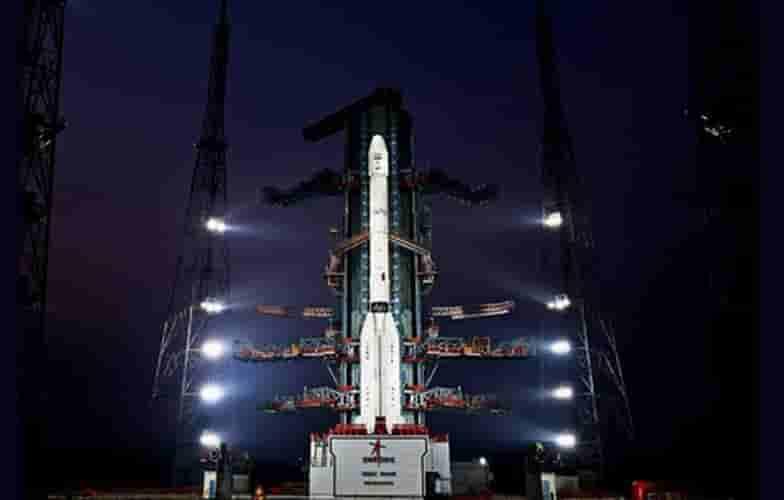
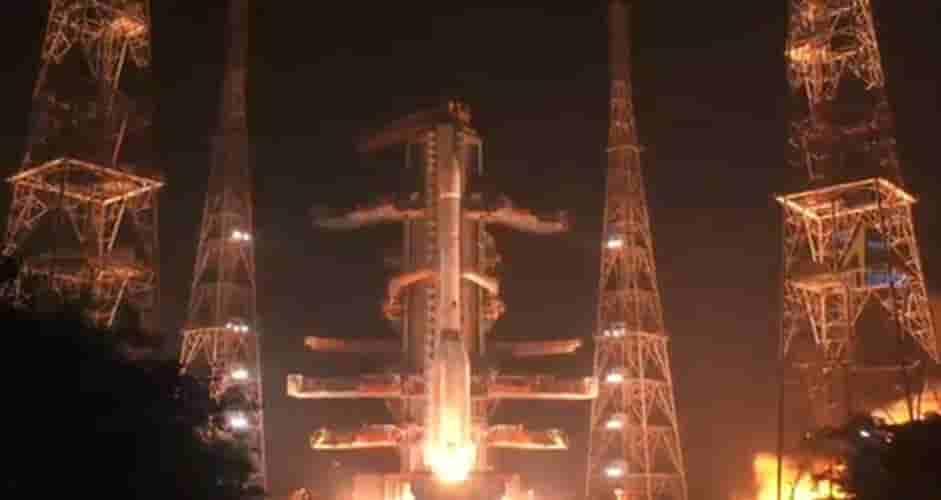
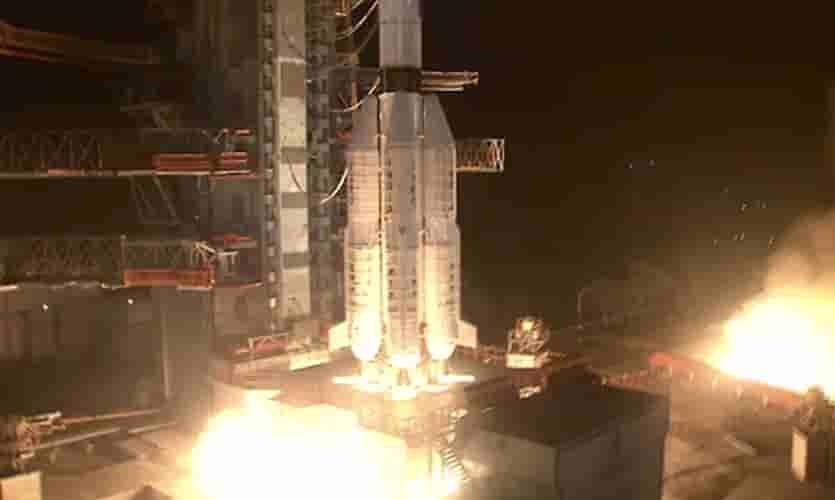
Launched in September 2023, Aditya-L1 is currently operational at the Sun-Earth L1 point, approximately 1.5 million kilometres from Earth. Its position allows it to continuously observe the Sun, providing valuable data for studying solar activity and its effects on the space environment.
The spacecraft carries seven scientific payloads, with VELC serving as its primary instrument. The internally occulted coronagraph is designed to observe the solar corona, the Sun's outer atmosphere, through multiple observational modes.
The researchers also used their three-dimensional model to examine how the CME's orientation and uneven lateral expansion could produce the spectral structures recorded by VELC.
The team plans to apply the technique to other coronal mass ejections to reconstruct their movement without depending entirely on observations from multiple space-based viewing positions. This approach could be particularly useful in studying the lower solar corona, where CMEs evolve rapidly and their movement along the line of sight cannot be determined through conventional imaging alone.
The findings add to Aditya-L1's growing scientific contribution and could help improve understanding of solar eruptions, an important step towards more accurate space-weather predictions and better protection of satellites and communication infrastructure.




© Copyright
Reporter Post.All Rights Reserved |
Powered by: Aptilogic Software |
 |
Page rendered in 0.0094 seconds.