Sun, November 01, 2026


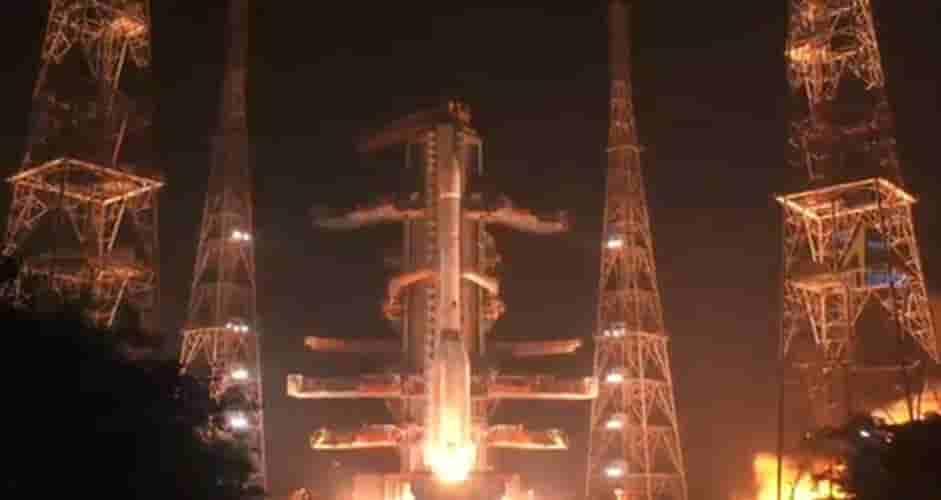
Photo: IANS
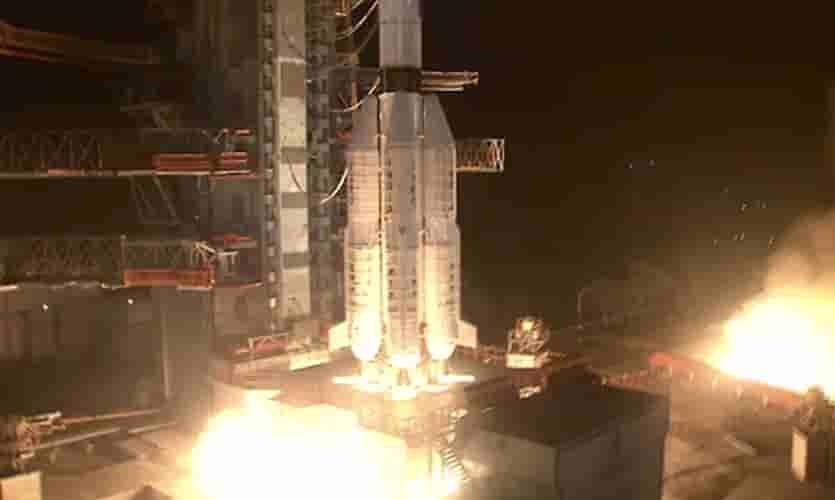
Sriharikota: India has strengthened its indigenous satellite navigation capabilities with the successful launch of the NVS-03 satellite, taking the number of operational navigation satellites in orbit to four. ISRO Chairman V. Narayanan said the country is now moving towards establishing a seven-satellite constellation to provide more accurate and uninterrupted positioning, navigation and timing (PNT) services.
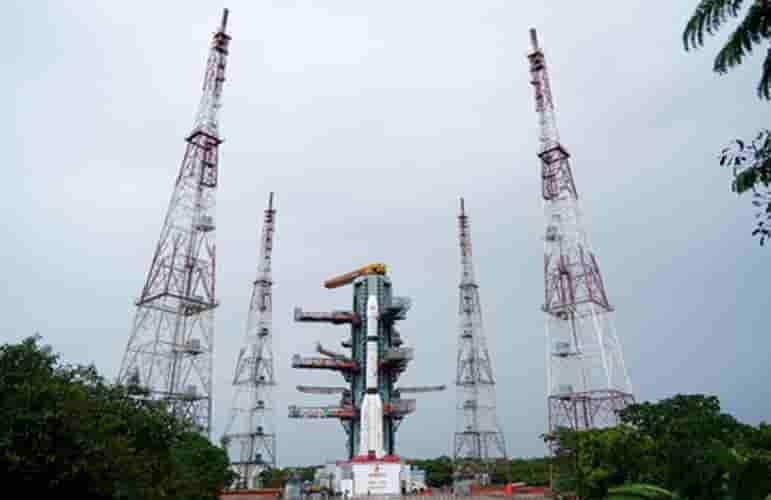
The NVS-03 satellite was successfully placed in its designated orbit by the GSLV-F18 mission. Speaking to IANS after the launch, Narayanan expressed satisfaction with the mission's precise execution and said the latest achievement marked an important step towards strengthening India's independent navigation infrastructure.
"For enhanced PNT services, a minimum of four satellites are required, and with today's launch, we now have four satellites in orbit," he said.
However, he explained that a constellation of seven satellites would be necessary to ensure continuous service and greater positioning accuracy. Two additional satellites are in the final stages of preparation, while the approval process for another is underway. Once the constellation is completed, India will join a select group of countries with an independent regional satellite navigation system.
The ISRO chief also outlined an ambitious launch schedule for the remainder of the current financial year, with at least five more missions targeted. These include the first uncrewed Gaganyaan mission, along with two Polar Satellite Launch Vehicle (PSLV) missions and two Small Satellite Launch Vehicle (SSLV) missions. The space agency is also planning a launch by the private sector.
"Overall, we are looking at six launches, but completing at least five missions remains our primary objective," Narayanan said.
A major highlight of the upcoming schedule will be the uncrewed Gaganyaan G mission, a crucial step towards India's first human spaceflight programme. The mission aims to demonstrate the country's ability to send Indian astronauts, known as Gaganyatris, into space aboard an indigenously developed launch vehicle.
Narayanan said ISRO had completed more than 8,000 tests as part of the programme. Before carrying astronauts, the agency must successfully complete three uncrewed missions to validate the launch vehicle, spacecraft and other critical systems.
Emphasising that astronaut safety remains the programme's foremost priority, he said ISRO was concentrating on the uncrewed missions before proceeding with human spaceflight. Various teams are working on the development and validation of critical systems, while extensive simulation exercises are being conducted.
He said teams at the Liquid Propulsion Systems Centre (LPSC), U R Rao Satellite Centre (URSC), ISRO Propulsion Complex (IPRC) and other facilities were contributing to the development of essential systems, launch vehicle preparation and software for the service and crew modules.
Describing Gaganyaan as one of India's most prestigious and technologically challenging space programmes, Narayanan expressed confidence that the mission would achieve its objectives in the near future.
The successful deployment of NVS-03 and the planned launch schedule reflect ISRO's parallel focus on strengthening India's satellite navigation infrastructure and advancing its human spaceflight ambitions. Both programmes are significant to the country's long-term goal of developing greater self-reliance in space technology.




© Copyright
Reporter Post.All Rights Reserved |
Powered by: Aptilogic Software |
 |
Page rendered in 0.012 seconds.