Sat, October 31, 2026



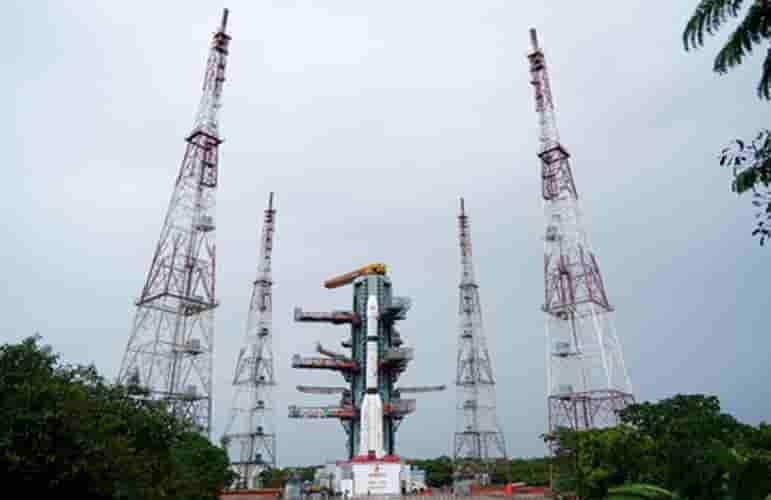
Photo: IANS
New Delhi- The Indian Space Research Organisation (ISRO) on Friday successfully launched NVS-03, a next-generation navigation satellite designed to strengthen India's indigenous satellite navigation system, NavIC, and ensure continuity of positioning and navigation services.
The satellite was launched aboard the Geosynchronous Satellite Launch Vehicle (GSLV-F18) from the Satish Dhawan Space Centre in Sriharikota, Andhra Pradesh, at 11:51 pm.
Confirming the launch, ISRO announced on social media platform X that the GSLV-F18 rocket, carrying the NVS-03 satellite, had lifted off from the space centre's Second Launch Pad. The agency described the mission as a crucial step in its efforts to strengthen and restore the NavIC satellite constellation.
Standing approximately 50 metres tall, the three-stage GSLV-F18 carried the 2,232-kg satellite into space, targeting a Geosynchronous Transfer Orbit (GTO). Following deployment, NVS-03 will undergo a series of orbit-raising manoeuvres before reaching its designated geosynchronous orbital position at 32.5 degrees East.
NVS-03 is the third satellite in ISRO's second-generation NVS series, developed to enhance the capabilities of the Navigation with Indian Constellation (NavIC), India's independent regional navigation satellite system.
A key feature of the satellite is its indigenous atomic clock, which will work alongside procured atomic clocks to support precise timing and navigation services. The satellite also introduces the L1 navigation frequency in addition to the existing L5 and S-band signals, expanding NavIC's capabilities and improving its suitability for a wider range of civilian applications.
According to ISRO, the enhanced system will provide coverage across India's landmass and an area extending approximately 1,500 km beyond the country's geographical boundaries.
NavIC, often compared with the US-operated GPS, has been developed to provide independent Position, Velocity and Timing (PVT) services to users in India and neighbouring regions. Its applications include transportation, maritime navigation, disaster management and other location-based services.
The system offers two categories of services: Standard Positioning Service (SPS), which is available for civilian users, and Restricted Service (RS), an encrypted service intended for authorised users.
ISRO plans to deploy a total of five second-generation navigation satellites to strengthen the existing NavIC constellation. These satellites are expected to introduce improved capabilities and help maintain uninterrupted navigation services, reducing India's dependence on foreign satellite navigation systems.
The NVS-03 mission marks another step in India's efforts to build a more robust and technologically independent navigation infrastructure for civilian, commercial and strategic applications.




© Copyright
Reporter Post.All Rights Reserved |
Powered by: Aptilogic Software |
 |
Page rendered in 0.0138 seconds.